Hey Traveller!

Explore. Experience. Encamp.

🦏Hornbill Festival 2026✦Book Now✦Nagaland, India🦏Hornbill Festival 2026✦Book Now✦Nagaland, India🦏Hornbill Festival 2026✦Book Now✦Nagaland, India🦏Hornbill Festival 2026✦Book Now✦Nagaland, India🦏Hornbill Festival 2026✦Book Now✦Nagaland, India🦏Hornbill Festival 2026✦Book Now✦Nagaland, India🦏Hornbill Festival 2026✦Book Now✦Nagaland, India🦏Hornbill Festival 2026✦Book Now✦Nagaland, India
All Itineraries>Mystic Nagaland 6N-7D
GroupGroup
6N - 7D

Mystic Nagaland

Tribal Tales, Mountain Trails & Naga Flavours

6 Nights / 7 Days
2 – 10 People
Easy
Road Trip
Nagaland
Kohima, Touphema, Mokokchung, Longwa, Tuensang, Pfutsero, Khonoma
Your Trip Impact
You Save
196KGS
of Carbon Emissions
That's like planting 10 Trees
Balanced via verified restoration projects
Your Trip Impact
You Save
196KGS
of Carbon Emissions
That's like planting 10 Trees
Balanced via verified restoration projects

Overview

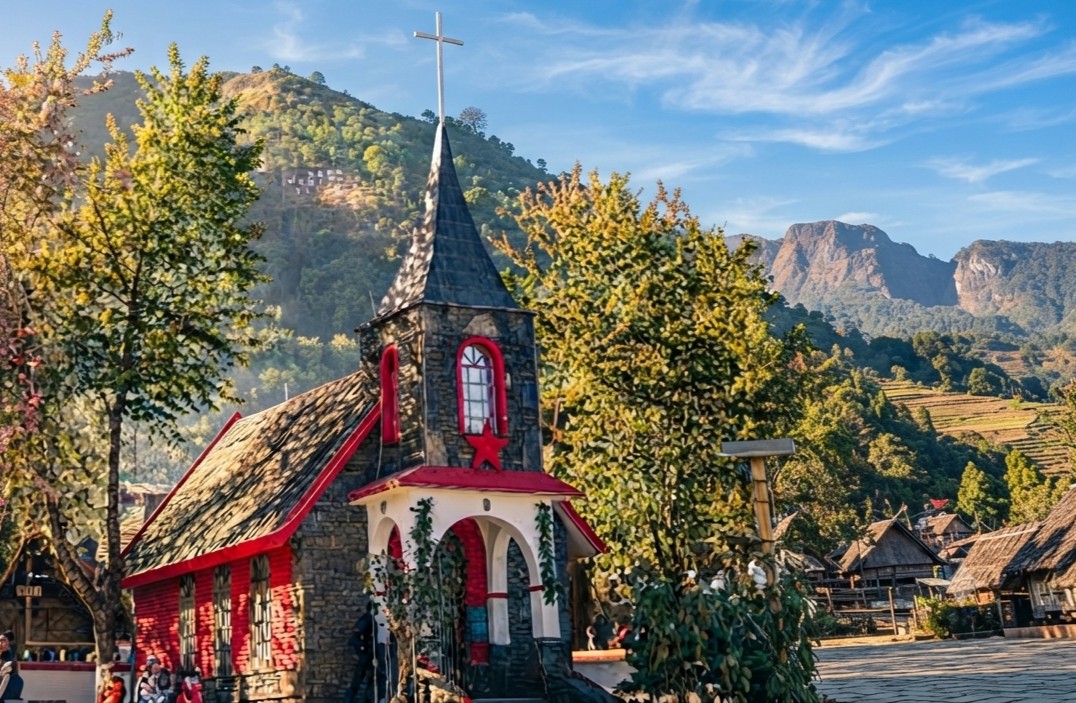
Mystic Nagaland takes you deep into the heart of Nagaland, where misty mountain landscapes, vibrant tribal traditions, ancient villages, and unforgettable local flavours come together. From the cultural charm of Kohima and the dramatic trails of Dzukou Valley to the traditional villages of Touphema, Mokokchung, Longwa, Tuensang, Pfutsero, and Khonoma, every stop reveals a different side of Naga life. Meet local communities, discover age-old customs, explore scenic mountain villages, taste authentic Naga cuisine, and experience the warmth of village homestays along the way. This is a journey beyond sightseeing—an opportunity to experience Nagaland through its people, landscapes, stories, food, and living traditions.


Overview Gallery Image
Duration
7 Days / 6 Nights
Best Time
Oct - Mar
Trip Type
Road Trip
Group Size
2 to 10 people
Climate Impact Background
TRAVEL CLIMATE IMPACTCalculated based on standard travel carbon metrics
196 kgCO₂e
per traveller
You're making a positive impact 💚
100% Carbon BalancedVerified Restoration Projects

Your journey's emissions are balanced through high-impact climate projects around the world.

Forest Restoration
Verified Impact
Sustainable Future
Climate positive travel for a better tomorrow
Learn More

Itinerary

Day 1Kohima: Where Nagaland Begins
Morning
Arrive in Kohima and settle into your hotel after the journey, keeping the first morning relaxed so you have enough energy for the cultural sightseeing planned later in the day.
Take some time to freshen up, organize your belongings, and prepare for your first exploration of Kohima.
Late Morning
Enjoy a relaxed breakfast at the hotel and prepare for your first sightseeing visit, with enough time to carry water, a light jacket, and comfortable walking shoes.
Keep breakfast filling but light because several sightseeing stops involve walking and standing.
Afternoon
Visit the Kohima War Cemetery, a peaceful and historically important memorial dedicated to soldiers who lost their lives during the Second World War, and take time to appreciate the carefully maintained grounds.
Keep the visit quiet and respectful while learning about Kohima’s important wartime history.
Late noon
Continue to the Nagaland State Museum to explore displays representing the state’s tribal communities, including traditional clothing, jewellery, weapons, household objects, and other cultural artefacts.
This is a useful introduction to Nagaland’s diverse tribal traditions before visiting its villages.
Evening
If the day’s timing allows, continue to Kisama Heritage Village and explore its traditional Naga-style structures, Morungs, cultural spaces, and architectural elements representing Nagaland’s different communities.
Kisama provides a convenient introduction to Naga architecture, customs, festivals, and cultural traditions.
Late Evening
Enjoy your first proper Naga food experience and try local specialities such as Galho, smoked pork with Axone, traditional chutneys, dry fish preparations, or other seasonal dishes.
Start with small portions if you are unfamiliar with fermented, smoked, or particularly spicy Naga flavours.
Night
Return to your hotel and rest after the first day of sightseeing, allowing yourself enough time to recover before the early start and physically demanding Dzukou Valley trek.
Tomorrow involves a long mountain trek, so a good night’s sleep is important.
Highlights of the Day
Day 2Dzukou Valley: Into the Misty Mountains
Day 3Touphema: Living Naga Traditions
Day 4Mokokchung: Heartland of the Ao Nagas
Day 5Longwa: Into Konyak Country
Day 6Tuensang: Beyond the Usual Trails
Day 7Khonoma: Where Heritage Meets Nature

Stays & Accommodations

Upcoming Group Trips

Trip
16 Sept 2026 – 22 Sept 2026
7 Days
Starting From₹ 55,350/ Person

FAQ'S

Q1.Where is Nagaland located?
A:Nagaland is located in Northeast India, bordered by Assam to the west, Arunachal Pradesh to the north, Manipur to the south, and Myanmar to the east.
Q2.Do Indians need a permit to visit Nagaland?
A:Yes. Indian citizens require an Inner Line Permit (ILP) to enter Nagaland, which can be applied for online or obtained on arrival in Dimapur or Kohima.
Q3.What is the best time to visit Nagaland?
A:The best time to visit Nagaland is October to March, when the weather is pleasant and major festivals like the Hornbill Festival take place.
Q4.What is Nagaland famous for?
A:Nagaland is famous for its tribal culture, festivals, handwoven textiles, Dzukou Valley, traditional food and the Hornbill Festival.
Q5.Which is the highest peak in Nagaland?
A:Mount Saramati is the highest peak in Nagaland, with an elevation of approximately 3,826 metres.
Q6.What is the main festival of Nagaland?
A:The Hornbill Festival is the main and most famous festival of Nagaland, celebrated every year in December.