

17 Tribes of Nagaland: Culture, Festivals, Villages & Hornbill Festival
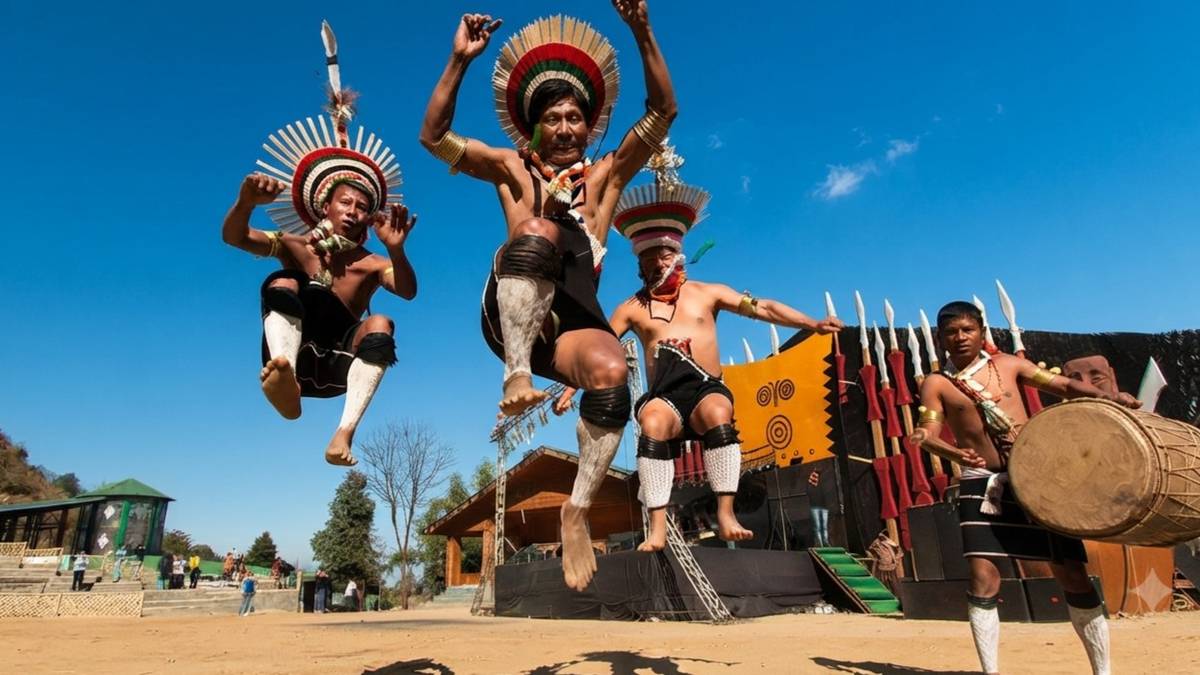
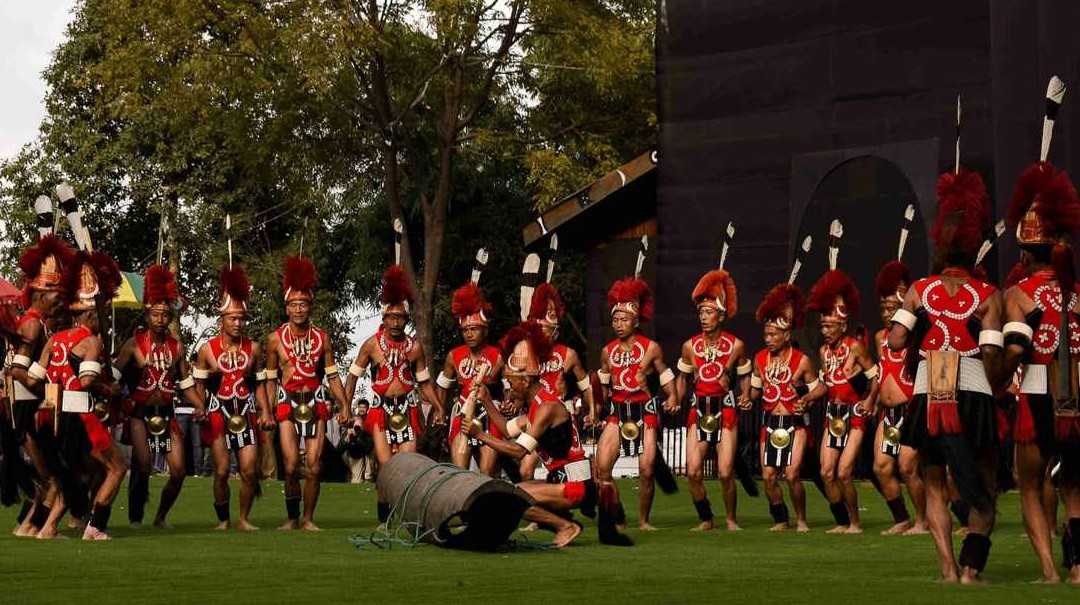
There’s a moment that happens to almost everyone who visits Nagaland for the first time. You’re standing at Kisama, drums are pounding somewhere in the distance, a group of men in warrior headgear walk past laughing about something on their phones, and you realise this isn’t a museum. It’s not a "cultural show" put on for tourists. It’s just Tuesday for them. That’s the thing about Nagaland — the culture here isn’t preserved behind glass, it’s lived, cooked, worn, sung, and passed down at the dinner table.
At Encamp Adventures, we’ve spent years building small-group, low-impact trips through Nagaland, and if there’s one thing we keep telling first-time travellers, it’s this: don’t just go for the festival. Go to understand the people who make the festival worth attending. So let’s start there.
Planning to experience the Hornbill Festival yourself? Here are some useful resources to help you plan your visit -
Hornbill Festival And Nagaland Group Tour Packageencampadventures.com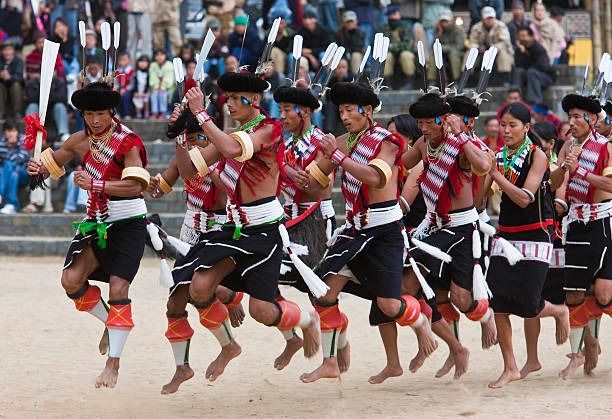
Where Is Nagaland? Location, Capital, Geography & Borders
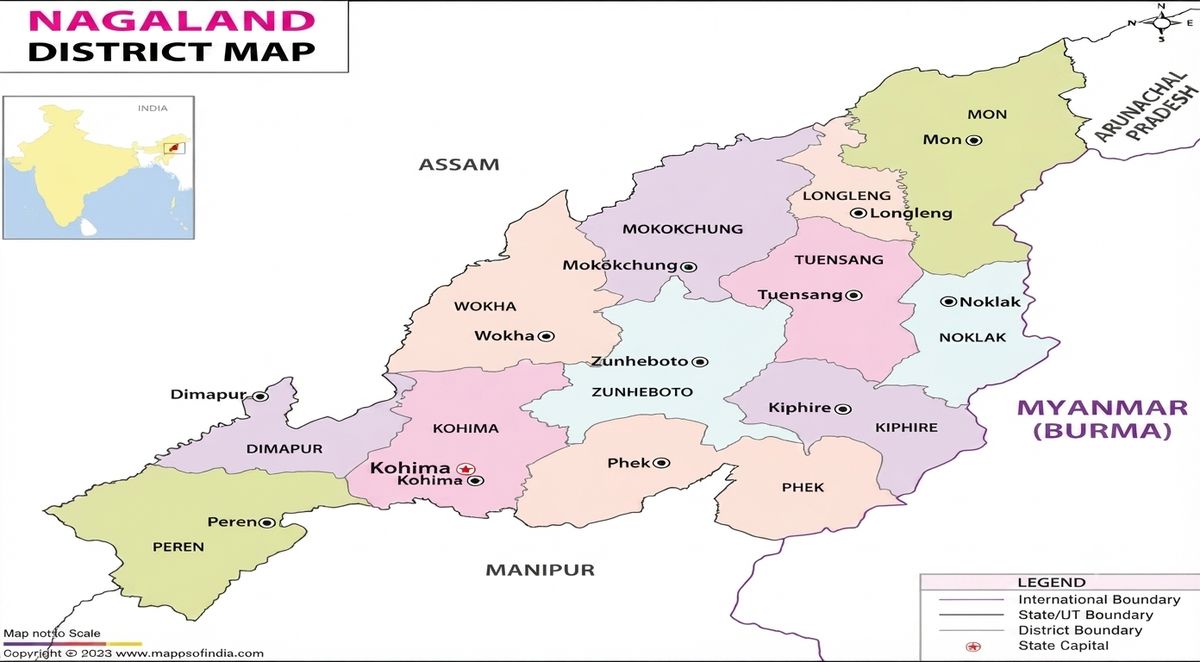
Nagaland is a hilly state tucked into the far northeast corner of India, bordering Myanmar to the east and sharing edges with Assam, Manipur, and Arunachal Pradesh. It became India’s 16th state in December 1963, with Kohima as its capital. Most people here live in villages perched on ridgelines, and the population is overwhelmingly Christian — a legacy of 19th-century missionary work that blended with, rather than erased, older tribal customs. That blend is part of what makes the place so fascinating: you’ll see a church steeple next to a wood-carved warrior gate, and both belong there.
But the real headline is this —Nagaland is home to 17 officially recognised major tribes, with communities spread across the state’s districts and neighbouring parts of Assam, Arunachal Pradesh, Manipur and Myanmar.Some tribes live just a valley apart from each other, yet their languages aren’t even mutually intelligible. That’s how distinct these communities really are.
What Are the 17 Tribes of Nagaland? Culture, Communities & Festivals
Here’s the fuller picture.
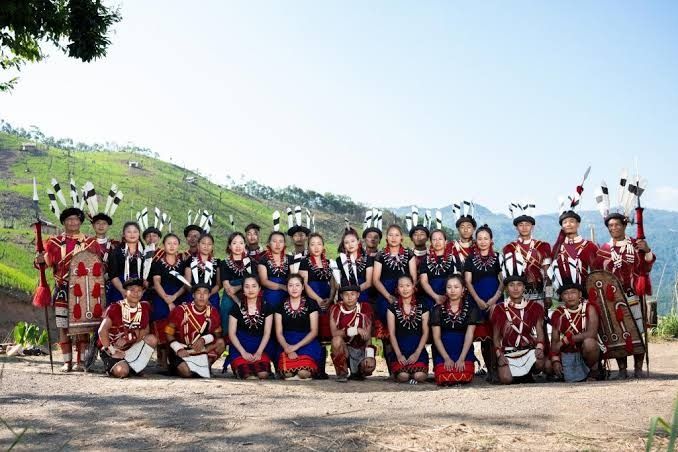
1. Angami —
- Where they live
- Mainly in Kohima district, with communities across Southern, Western, Northern, and Chakhro Angami areas.
- Community structure
- Angami villages are traditionally divided into khels, or clan-based wards, each with its own identity, gates, and granaries.
- Identity
- The Angamis traditionally call themselves Tenyimi and share cultural connections with tribes such as the Chakhesang, Rengma, and Zeliang.
- Traditional life
- Historically known as warriors and terrace farmers, with terraced cultivation shaping much of their landscape.
- Festival
- Sekrenyi, held in February, is a major festival focused on purification, renewal, and community life.
- Villages to know
- Khonoma, Kigwema, Khuzama, Jotsoma, Chiechama, and Chedema are among the well-known Angami settlements.
- What makes them unique
- Their strong khel system, terraced villages, warrior heritage, and distinctive cultural identity make the Angamis one of the most prominent Naga communities.
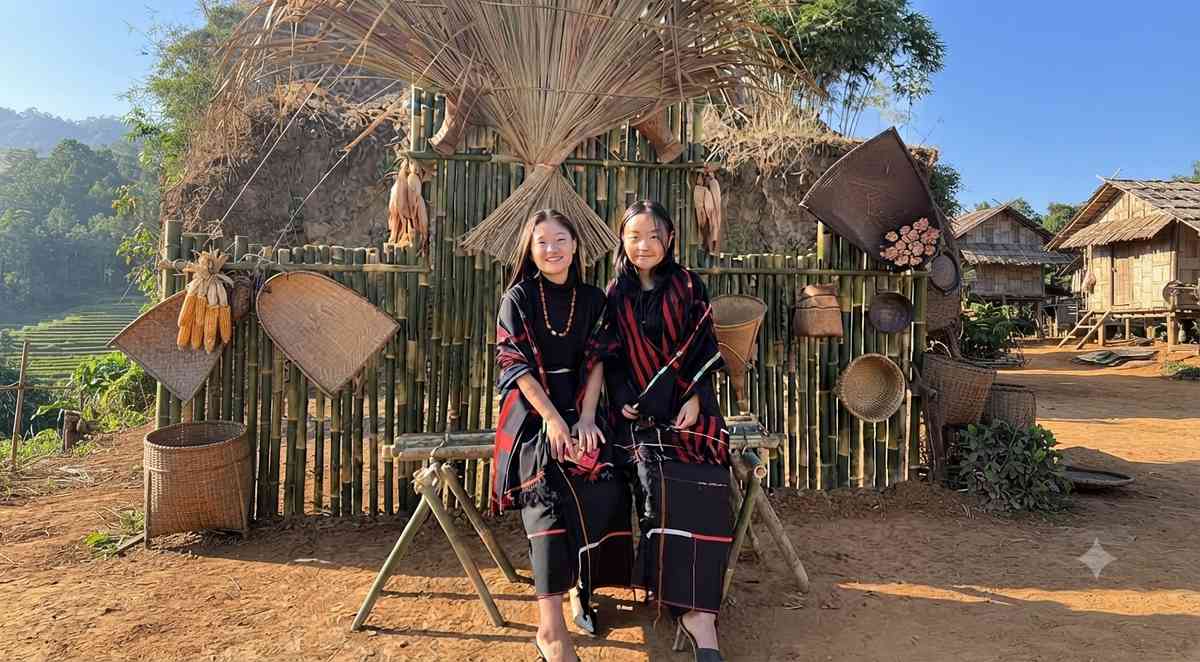
2. Ao —
- Where they live
- Mainly in Mokokchung district, one of the traditional homelands of the Ao people.
- Language
- Ao society has three major dialects — Chungli, Mongsen, and Changki. Chungli is widely used in churches and schools, while Mongsen is considered the older form.
- Community & clans
- Traditionally organised around six major clans — Pongen, Longkumer, Jamir, Imchen, Walling, and Longchar — divided between the Chungli and Mongsen groups.
- Family identity
- Surnames often indicate clan lineage, making clan identity an important part of Ao society.
- Religion & history
- The Aos were among the first Naga communities to embrace Christianity, which became an important part of modern Ao life.
- Festival
- Moatsu, celebrated around the sowing season, features music, dance, feasting, and community gatherings.
- What makes them unique
- Their distinct dialect groups, strong clan identities, and deep connection between traditional customs and Christian life give Ao culture a distinctive character.
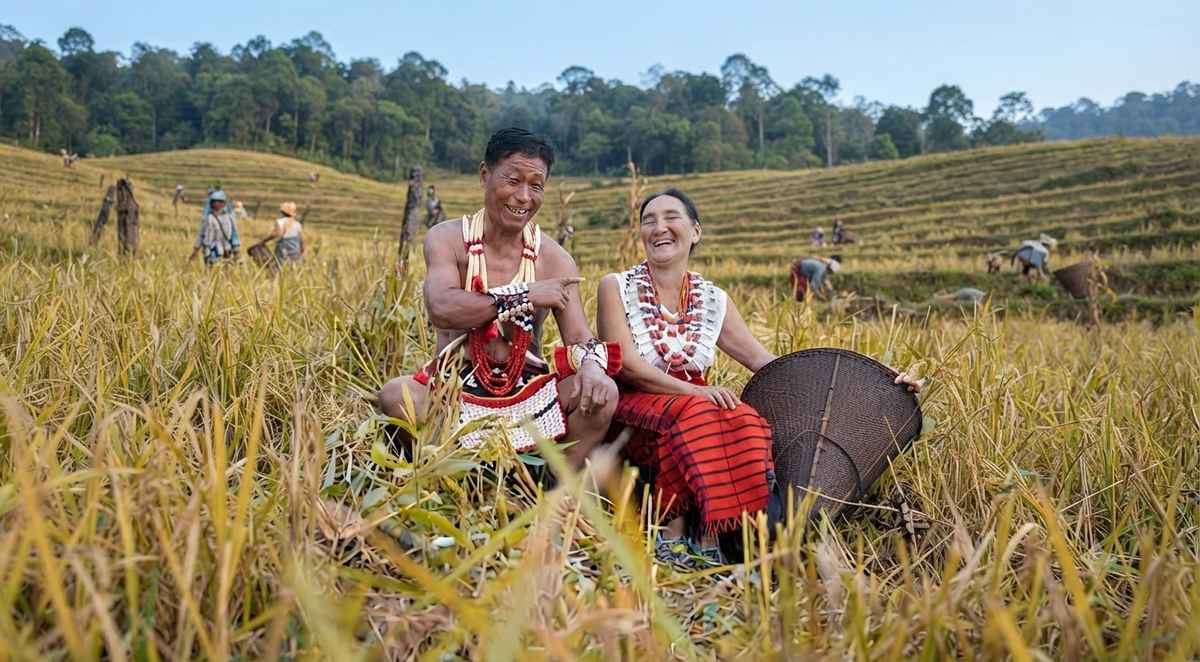
3. Chakhesang —
- Where they live
- Mainly in Phek district, with communities spread across the surrounding areas.
- Name & identity
- The name “Chakhesang” comes from Cha (Chokri), Khe (Khezha), and Sang (Sangtam), reflecting the tribe’s mixed origins.
- History
- The three groups formally united in 1946 to establish a separate identity rather than being classified as Eastern Angami.
- Community
- Chokri and Khezha are the two main groups within Chakhesang identity, alongside smaller communities such as Poumai (Sapuh) and some Sumi and Rengma villages.
- Traditional culture
- The Chakhesang are particularly known for their intricate weaving traditions and distinctive textile work.
- Festival
- Sükrünye is an important festival associated with health, well-being, and good fortune.
- What makes them unique
- Their history shows how Naga tribal identities can develop through the coming together of different communities, rather than being defined by a single ancestral group.
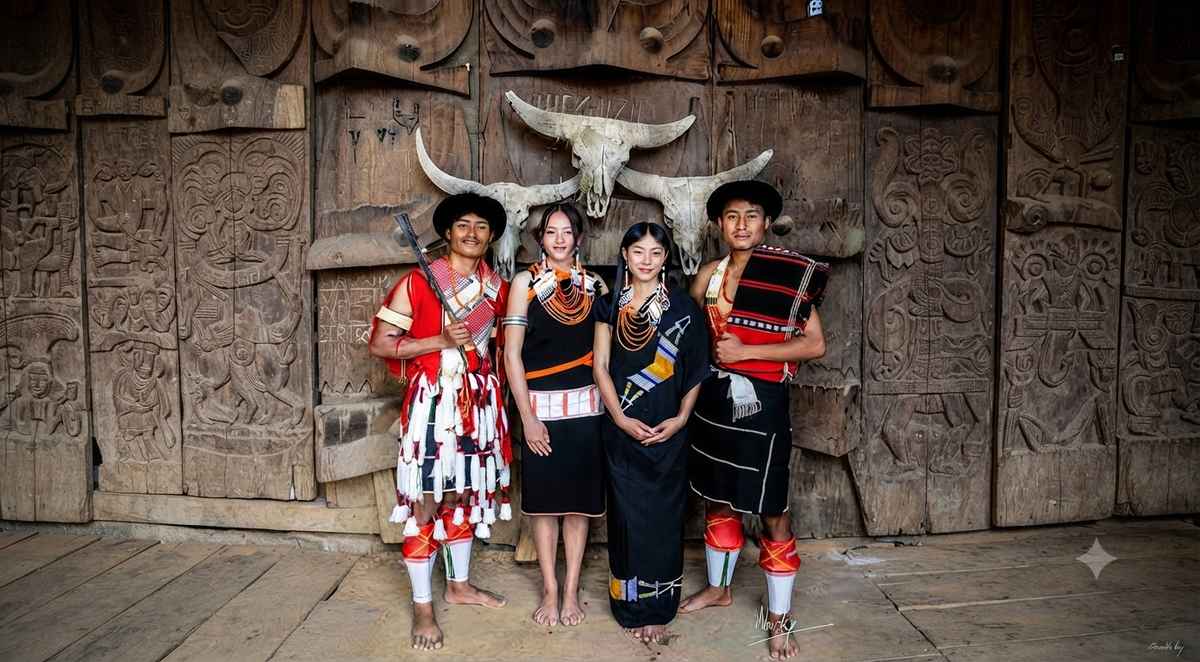
4. Chang —
- Where they live
- Mainly in and around Tuensang district, with historical connections to the Changtongya area.
- Origins
- The Changs trace their traditional origins to a place known as Changsangmongko before settling in their present-day homeland.
- Community structure
- Chang villages traditionally follow the wider Naga khel system, with communities organised around clans and village wards.
- Traditional governance
- Villages were historically led by hereditary chiefs, supported by clan elders.
- Traditional culture
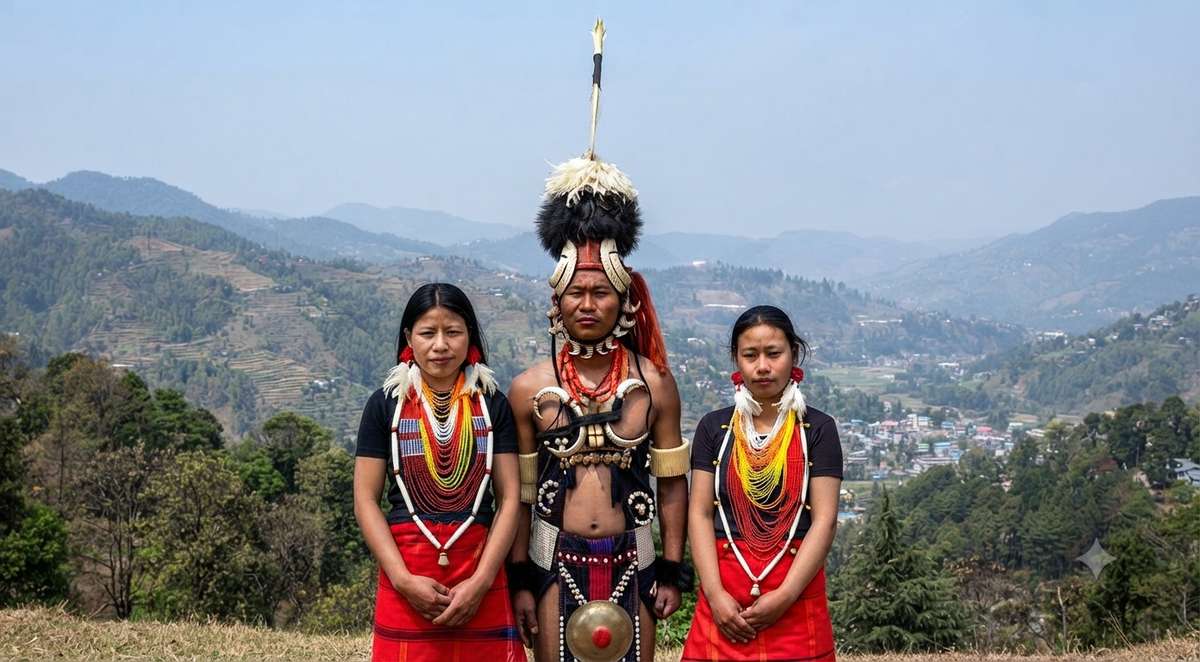
- The Changs are known for vibrant body tattoos and intricate beadwork, which form an important part of their traditional identity.
- Festival
- Naknyulum marks the New Year and is an important cultural celebration.
- What makes them unique
- Their combination of distinctive body art, beadwork, clan-based village organisation, and traditional hereditary leadership gives Chang culture a strong identity.
5. Kachari —
- Where they live
- Mainly in the plains of Nagaland, particularly around Dimapur.
- Historical roots
- The Kacharis have deep connections to the historic Kachari Kingdom, whose ancient ruins can still be seen in Dimapur.
- Community structure
- Unlike many hill-based Naga tribes, Kachari social identity was shaped more by their kingdom-based political history than by the traditional khel system.
- Cultural identity
- Their heritage reflects the older plains-based history of the region, giving them a distinct place among Nagaland’s recognised tribes.
- Festival
- Bushu Dima is their major harvest festival, celebrated with traditional cultural activities and community gatherings.
- What makes them unique
- Their connection to the ancient Kachari Kingdom and Dimapur’s archaeological heritage sets them apart from many of Nagaland’s hill tribes.
6. Khiamniungan —
- Where they live
- Mainly in the remote eastern parts of Nagaland near Noklak, close to the Myanmar border, with related communities also living across the border.
- Community & identity
- Village identity is closely connected to traditional weaving, with each village often known for its own distinctive colours and patterns.
- Traditional practices
- Weaving traditions and textile designs are passed down through family lines and remain an important part of cultural identity.
- Festival
- Miu marks the beginning of the planting season and is an important agricultural festival.
- What makes them unique
- Their distinctive village-specific weaving traditions and close connection to the Myanmar-border region give the Khiamniungan a strong cultural identity.
7. Konyak —
- Where they live
- Mainly in Mon district, with communities extending into Arunachal Pradesh and Myanmar.
- Community & leadership
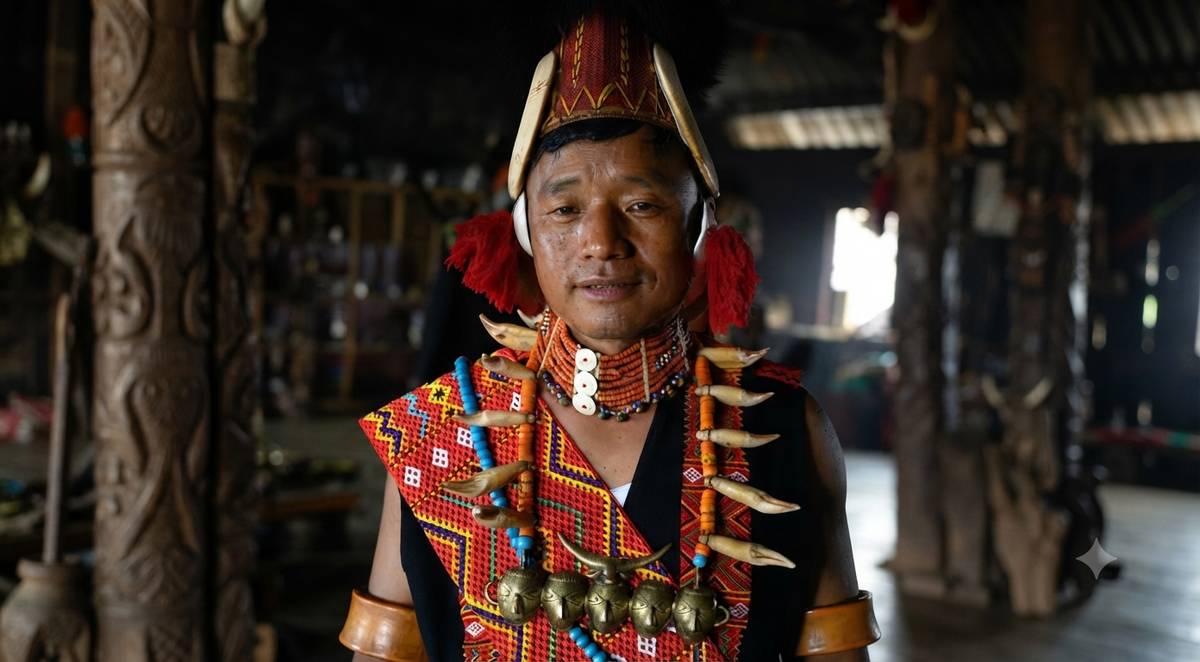
- Traditionally governed by hereditary chiefs called Anghs, with villages organised around ruling and commoner clans.
- Culture
- Known for facial tattoos, woodcraft, beadwork, and traditional gun-making. Their community house, or Baan, plays an important cultural role.
- Traditional practices
- Facial tattoos were historically linked to headhunting, a practice that has long been abandoned.
- Festival
- Aoleang celebrates the arrival of spring with traditional ceremonies and festivities.
- What makes them unique
- Their Angh leadership system, distinctive tattoos, and strong traditional craftsmanship make the Konyaks especially recognisable.
8. Kuki —
- Where they live
- Spread across several parts of Nagaland, with related Kuki-Chin communities in Manipur, Mizoram, and Myanmar.
- Community & culture
- Share strong cultural and clan connections with neighbouring Kuki-Chin communities.
- Traditional practices
- Known for bamboo dances and colourful traditional shawls.
- What makes them unique
- Their shared cultural heritage, vibrant textiles, and bamboo traditions connect Kuki communities across the region.
9. Lotha —
- Where they live
- Mainly in Wokha district, with villages traditionally organised into clans and khels.
- History
- Lotha oral traditions trace their migration through Khezakhenoma, a place regarded as an ancestral homeland shared by several Naga tribes.
- Culture
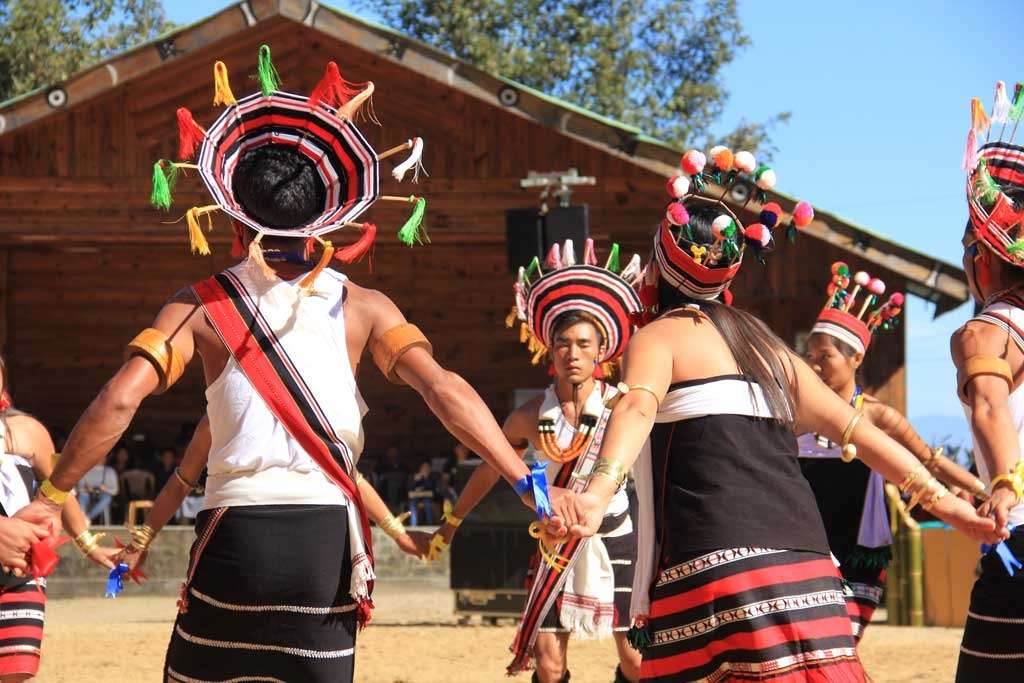
- Known for their rich folk music and strong community traditions.
- Festival
- Tokhu Emong, celebrated after the harvest, focuses on forgiveness, reconciliation, and community bonding.
- What makes them unique
- Their folk music, clan-based village life, and strong traditions of community reconciliation are central to Lotha culture.
10. Phom —
- Where they live
- Mainly in Longleng district, with villages organised around clan-based khels.
- Culture
- Known for woodcarving and metalwork, with skills traditionally passed down through family lines.
- Festival
- Monyu marks the New Year with feasting, traditional games, and community celebrations.
- What makes them unique
- Their skilled craftsmanship and strong clan-based village traditions are key features of Phom culture.
11. Pochury —
- Where they live
- Mainly in the Meluri and Phek areas of Nagaland.
- Community & identity
- Formed from three related groups — Kupo, Kuchu, and Khumumi — with close linguistic and cultural connections.
- History
- Once part of the “Sang” group within Chakhesang, the Pochurys later became a separately recognised tribe.
- Festival
- Yemshe is their major festival, expressing gratitude for a good harvest.
- What makes them unique
- Their shared roots, distinct tribal identity, and strong connection to agricultural traditions define Pochury culture.
12. Rengma —
- Where they live
- Found in Nagaland and parts of Assam.
- Community & leadership
- Unlike many Naga tribes, their chieftainship is not strictly hereditary; a capable clan member may be chosen to lead.
- Cultural connections
- Part of the wider Tenyimi family, with links to the Angami and Zeliang tribes.
- Traditional practices
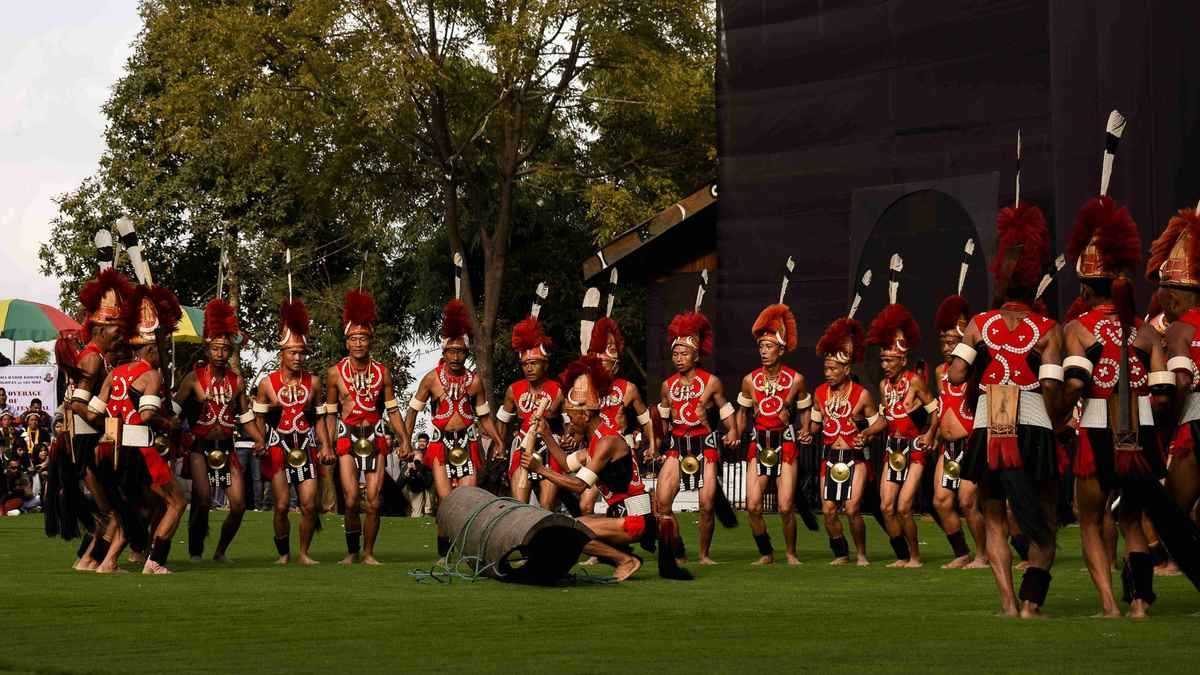
- Known for their log drum traditions and strong community customs.
- Festival
- Ngada is celebrated after the harvest with traditional festivities.
- What makes them unique
- Their merit-based traditional leadership system and distinctive log drum culture set the Rengmas apart.
13. Sangtam —
- Where they live
- Mainly around Kiphire, with villages organised into clans and khels.
- Community & history
- Share close historical connections with the Chakhesang and Yimchunger communities.
- Traditional practices
- Known for their bamboo craft and traditional village life.
- Festival
- Mongmong is a harvest thanksgiving festival celebrating the agricultural season.
- What makes them unique
- Their bamboo craftsmanship, clan-based communities, and strong agricultural traditions are central to Sangtam culture.
14. Sumi —
- Where they live
- Mainly in Zunheboto district and one of Nagaland’s larger Naga tribes.
- Community & clans
- Villages are divided into khels, traditionally led by hereditary chiefs called Akükau, with support from clan elders.
- Family identity
- Sumi surnames such as Zhimomi, Aye, Ayemi, and Sukhalu are linked to specific clan lines. Traditionally, marriage is outside one’s own clan.
- Traditional practices
- Historically known as a formidable headhunting community, the Sumis are now recognised for their strong community traditions.
- Festivals
- Tuluni (July) and Ahuna (November) are major festivals linked to the farming calendar.
- What makes them unique
- Their strong clan system, distinctive village organisation, and farming-based festivals are central to Sumi culture..
15. Tikhir —
- Where they live
- Mainly in Shamator, Kiphire, and Noklak districts.
- Identity
- Known as the “Dew People,” the Tikhir became Nagaland’s 17th officially recognised tribe in January 2022.
- Community & culture
- An agrarian, historically warrior society that blends Christianity with older cultural traditions.
- Traditional practices
- Known for the Log Drum Pulling Ceremony, reflecting their traditional community customs.
- Festival
- Tsonglaknyi, a four-day festival held in October, features traditional dances, purification rituals, and harvest blessings.
- What makes them unique
- Their distinct dialect, newly recognised tribal identity, and blend of Christian and traditional practices make the Tikhir culturally distinctive.
16. Yimchunger (Yimkhiung) —
- Where they live
- Mainly in Kiphire and Tuensang districts.
- Community & history
- Closely related to the Sangtam, with historical ties before becoming separately recognised.
- Culture
- Known for elaborate bead jewellery and strong community traditions.
- Festival
- Metemneo focuses on strengthening community bonds and celebrating togetherness.
- What makes them unique
- Their distinctive beadwork, close cultural ties with the Sangtam, and strong sense of community define Yimchunger culture.
17. Zeliang —
- Where they live
- Mainly across Peren district in Nagaland, Assam, and Manipur.
- Community & identity
- The Zeliang identity mainly brings together the Zeme and Liangmai groups, historically linked with the wider Zeliangrong community.
- Culture & traditions
- Known for bamboo dance and strong traditional customs.
- History & beliefs
- The community’s history is connected to the Heraka movement, which blended traditional beliefs with reform ideas.
- Festival
- Mileinyi is a spring festival celebrating the season and community life.
- What makes them unique
- Their diverse origins, traditional belief systems, bamboo dance, and connection to the Heraka movement give the Zeliang community a distinctive cultural identity.
Hornbill Festival Nagaland: Dates, Location, Tribes & What to Expect
If you only have time for one trip to Nagaland, most people (us included) will point you toward December. That’s when the Hornbill Festival takes over Kisama Heritage Village, about 12 km from Kohima, running every year from 1st to 10th December.
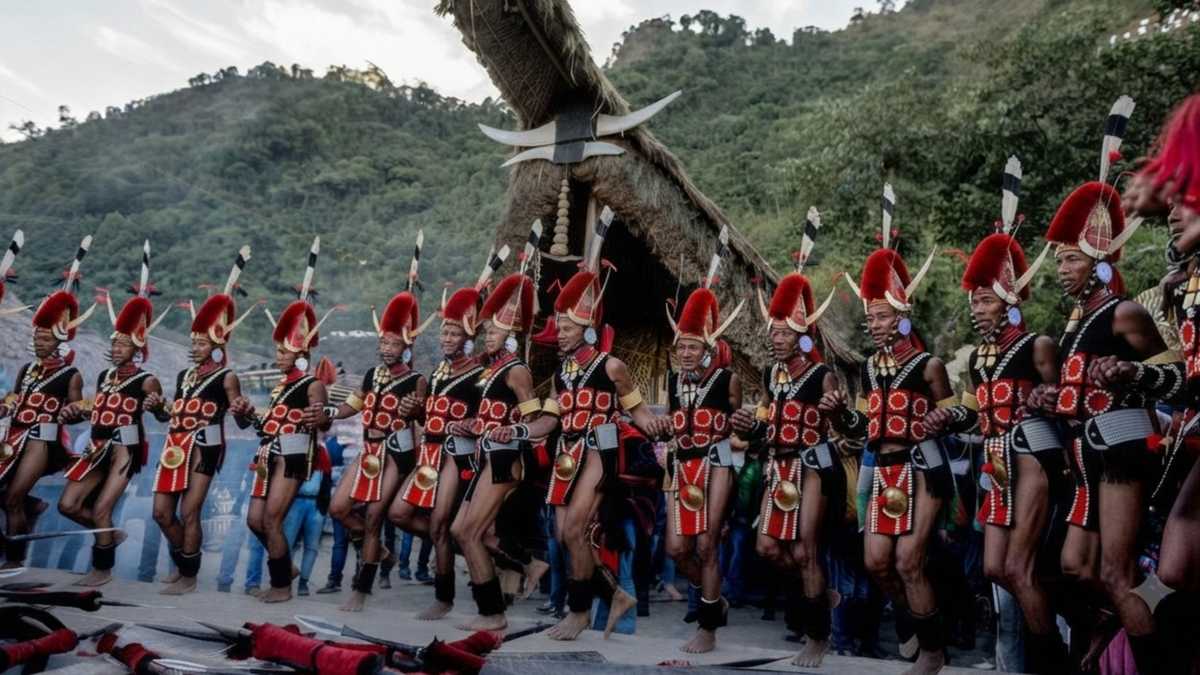
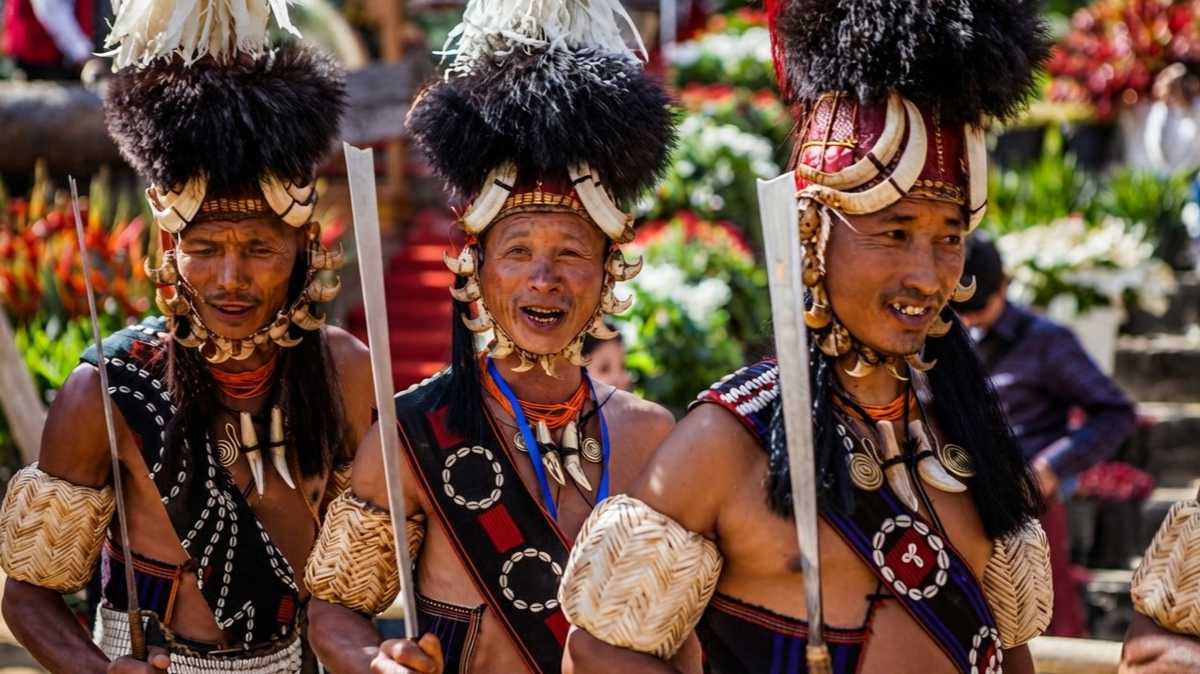
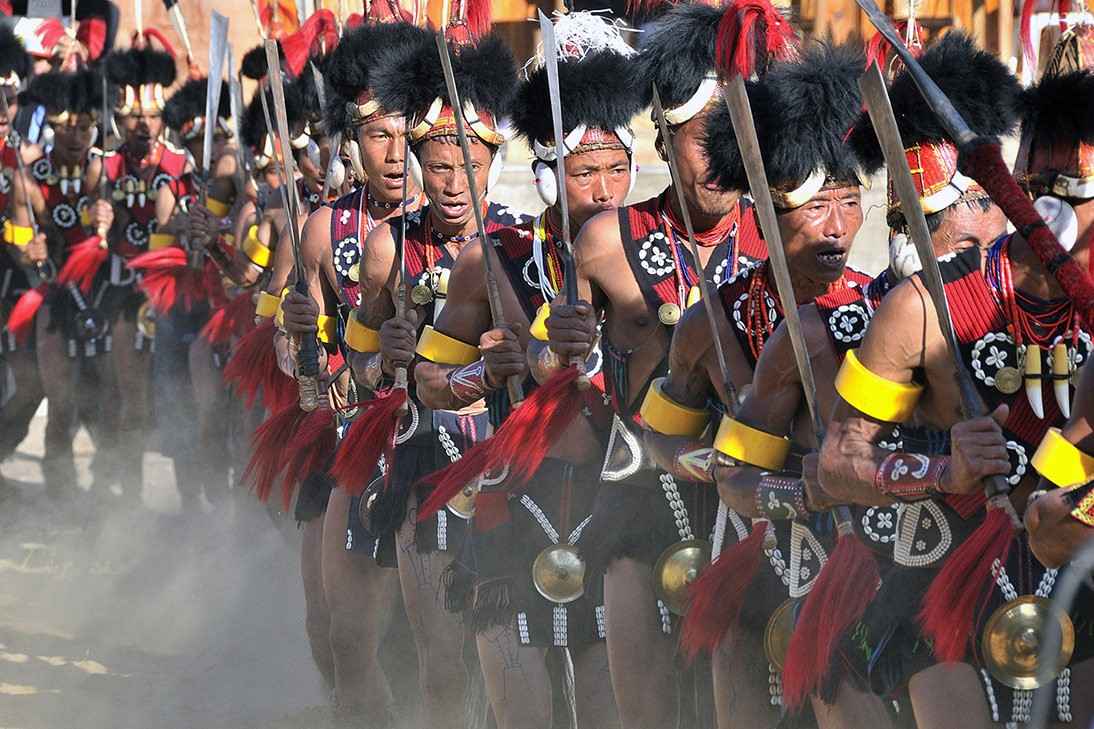
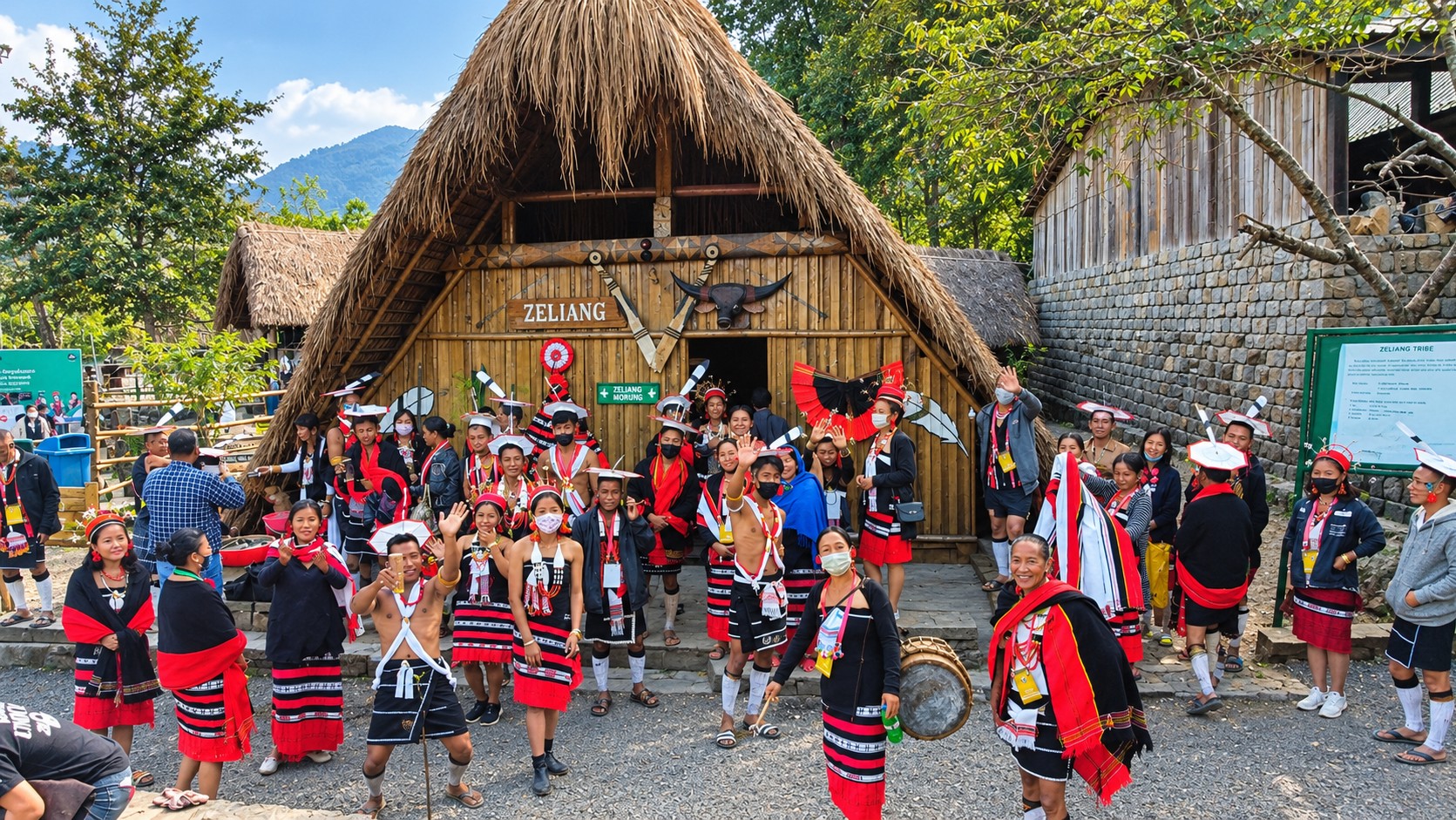
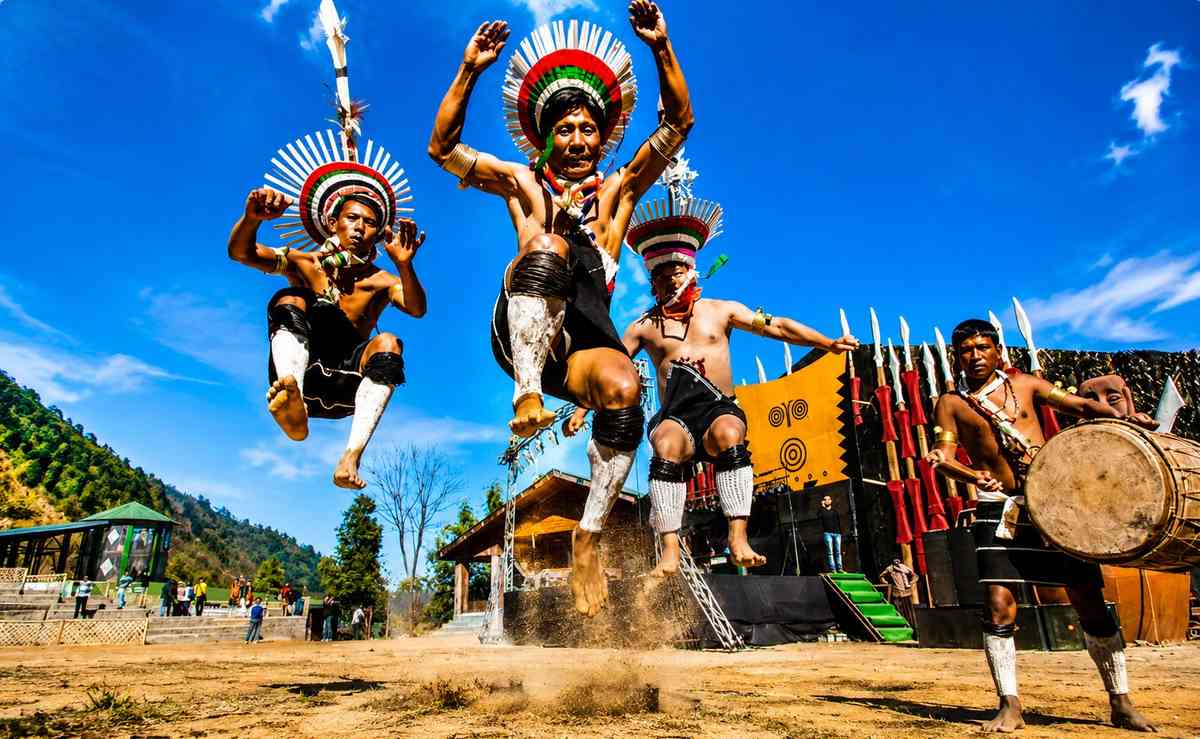
The festival is named after the great Indian hornbill, a bird that holds deep symbolic meaning in Naga folklore — its feathers appear in warrior headgear across nearly every tribe, representing strength, dignity, and status. It’s often called the "Festival of Festivals" because instead of each tribe celebrating separately in their own village, all 17 tribes set up traditional morungs (community houses) side by side at Kisama and showcase their own dance, music, food, and craft under one roof — or rather, one long stretch of hillside.
Here’s what it actually looks like on the ground:
- Each tribe builds and decorates its own morung, and you can walk in, meet tribal elders, and ask questions about their customs directly.
- Traditional dances happen throughout the day at the main arena, with tribes taking turns to perform.
- Local rice beer (zutho) and smoked meats are shared generously — Naga hospitality is not shy.
- There’s a Naga king chilli eating competition, motor rallies, a rock music contest (the festival has genuinely helped put Nagaland’s rock and metal scene on the map), and craft stalls selling handwoven shawls, wood carvings, and bamboo work.
- The festival started small — just three days when it launched in 2000 — and has grown into a full 10-day event because of how much traction it received from visitors.
Best Villages to Visit in Nagaland: Khonoma, Longwa, Touphema & More
The Hornbill Festival is the headline act, but the real texture of Naga culture lives in the villages, and each one has its own personality.
- Khonoma — An Angami village about 20 km from Kohima, famous for turning itself into India’s first "green village" by banning hunting and logging decades ago. It’s also historically significant as the site of Naga resistance against British forces. Walking through Khonoma’s terraced fields feels like walking through a living conservation project and a history lesson at once.
- Longwa — A Konyak village in Mon district that’s genuinely one of a kind — the India-Myanmar border runs straight through the chief’s house, meaning he can technically eat lunch in India and dinner in Myanmar without leaving his living room. It’s also one of the best places to meet the last surviving tattooed Konyak headhunters, elderly men who carry the old markings as living history.
- Touphema — A model tourist village near Kohima built specifically to give visitors an immersive but respectful stay in traditional-style huts, without disturbing the daily life of a working village.
- Kohima Village (Bara Basti) — One of Asia’s largest villages, and the ceremonial heart of the Angami tribe, packed with old wood-carved gateways called "kelhoukevhu" that mark status and achievement.
Every village has its own micro-culture. A Sumi village in Zunheboto feels different from a Lotha village in Wokha, which feels different again from a Chang settlement near Tuensang — different house styles, different songs, different food. That’s the layered richness Encamp Adventures tries to build into every itinerary, rather than rushing you through a single "highlight."
How Are the 17 Tribes of Nagaland Different? Languages, Culture & Festivals
Although all 17 tribes are Naga, each has its own language, traditions, crafts, festivals, and styles of dress. Their differences can be seen in everything from Angami weaving and Konyak woodcarving to festivals such as Sekrenyi, Tuluni, Tokhu Emong, and Ngada. Yet they share strong community values, agricultural traditions, hospitality, and a common cultural identity that comes together at the Hornbill Festival.
Sustainable Tourism in Nagaland: How to Travel Responsibly
This is a part we care about deeply at Encamp Adventures, and it’s not just marketing language for us. Naga villages are small, close-knit communities, and tourism can either support them or quietly wear them down. Every trip we build follows a few principles:
- We work directly with local homestays and village guides instead of large outside operators, so tourism income actually stays in the community.
- We calculate and offset the carbon footprint of every trip we run, supporting verified reforestation and community projects across the Himalayan and Northeast region.
- Our group sizes stay small on purpose, because a village morung can only host so many curious strangers respectfully at once.
- We brief every traveller before arrival on cultural etiquette — for instance, always ask before photographing elders, especially tattooed Konyak men who may not want their image used commercially, and never treat a morung visit like a photo backdrop.
- We prioritise routes and homestays that keep money with the people who are actually keeping these traditions alive, not just performing them for a season.
Responsible tourism in Nagaland isn’t about ticking a sustainability box. It’s about making sure that fifty years from now, there’s still a Konyak elder willing to sit and tell his grandson’s grandson about Longwa, and still a Sumi village celebrating Tuluni the way it always has.
Hornbill Festival Travel Tips: What to Know Before You Go
Having planned multiple Hornbill Festival trips for travellers, a few things we’ve learned rarely make it into the standard guides:
- Book stays outside Kisama itself, in Kohima town, and travel in for the day. Kisama gets extremely crowded by afternoon, especially on weekends, and accommodation right at the venue is limited and overpriced during festival week.
- The first three and last two days tend to be less crowded than the middle weekend — if flexibility allows, plan your visit around days 2-4 or day 9 for a calmer, more intimate experience with the tribal morungs.
- Talk to the elders in the morungs early in the morning, before the crowds build up. That’s genuinely when you get real conversations instead of quick photo interactions.
- Pair the festival with a village stay before or after — a night in Khonoma or a Sumi village gives context to everything you see at Kisama. Without it, the festival can feel like a showcase rather than a window into daily life.
- December nights in Kohima get cold (often close to freezing), and most homestays don’t have central heating, so pack proper layers — this catches more first-time travellers off guard than almost anything else.
For more practical information and travel planning tips, check out these helpful resources - -
Hornbill Festival Nagaland Group Tourencampadventures.com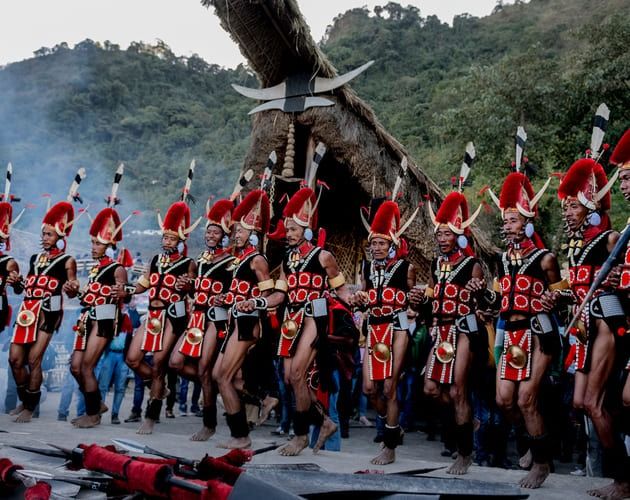
FAQs — Nagaland Travel & Hornbill Festival
When exactly is the Hornbill Festival held every year?
It runs from 1st to 10th December, every year, at Kisama Heritage Village, about 12 km from Kohima.
What is the best time to visit Nagaland?
The best time to visit Nagaland is October to February.
How do you get to Nagaland?
You can reach Nagaland by flying or taking a train directly into Dimapur, the state’s main transport gateway. Alternatively, you can drive via National Highway 29 from nearby cities like Guwahati or Shillong. From Dimapur, frequent shared taxis and local buses will take you up to the capital city of Kohima.
Do I need a permit to visit Nagaland?
Indian citizens don’t need a special permit. Foreign nationals usually need a Protected Area Permit (PAP), though this requirement is often relaxed during Hornbill Festival week to encourage international visitors — it’s worth checking current rules closer to your travel dates.
Is Nagaland safe for travellers, including solo and women travellers?
Yes, Nagaland is generally considered very safe, and Naga hospitality toward guests is well known. As with any unfamiliar destination, it helps to travel with a local guide, especially in remote village areas.
What’s the best way to experience more than one tribe’s culture in a single trip?
The Hornbill Festival is the easiest way, since all 17 tribes set up morungs side by side at Kisama. For a deeper experience, pair the festival with village stays in places like Khonoma (Angami) and Longwa (Konyak).
What should I eat while I’m there?
Naga food is bold and smoky — try smoked pork with bamboo shoot, axone (fermented soybean), and if you’re brave, something made with the Naga king chilli, one of the hottest chillies in the world.
Explore these resources to learn more about the Hornbill Festival, Naga tribes, and cultural experiences -
Nagaland Unveiled Hornbill Festival Expeditionencampadventures.comAbout the Author
Ratan Kumar is the CEO of Encamp Adventures, where he leads the team in curating travel experiences across North East India, with a focus on helping travelers experience the region authentically rather than as just another stop on a checklist.
About Encamp Adventures
- 25,000+ travellers served
- Community tourism expertise
- Climate - first travel initiatives
- Northeast India specialization
About Carbon Trace
Beyond curating trips to festivals like Hornbill, Encamp Adventures also powers Carbontrace.in, a sustainability and carbon intelligence platform that helps businesses, communities, and individuals measure, offset, and monetize their carbon footprint using satellite-based geospatial analytics, verified carbon credits, and blockchain-backed reporting. It’s part of a bigger mission: making sure the same communities that keep cultural treasures like the Hornbill Festival alive also benefit from transparent, verifiable climate action.