

Hornbill Festival Nagaland:
Hornbill festival 2026 at a glance:
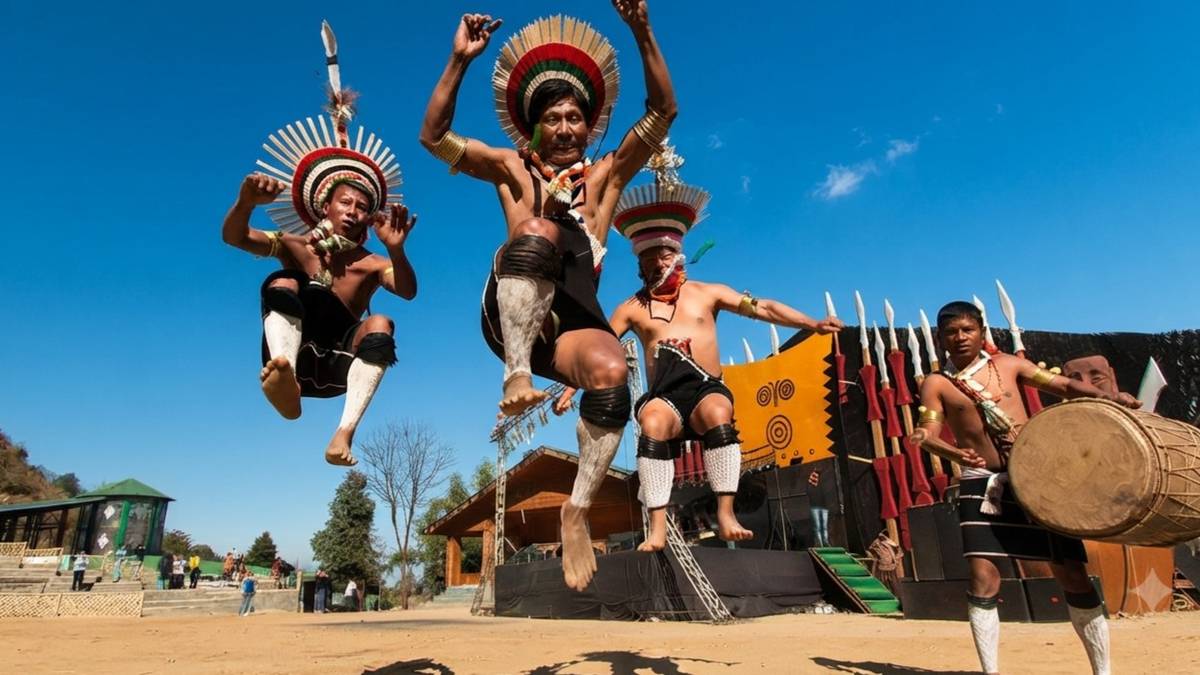
Hornbill Festival is Nagaland’s biggest cultural festival, held every year from December 1–10 at Kisama Heritage Village , just 12 km from Kohima. Known as the "Festival of Festivals," it brings together all major Naga tribes to celebrate their rich traditions through vibrant folk dances, warrior performances, indigenous games, handcrafted morungs, authentic Naga cuisine, and cultural exhibitions. Visitors can also enjoy the Hornbill International Music Festival , rock concerts, night carnival, local handicrafts, and exciting events like the famous Naga King Chilli Eating Competition . The Hornbill Festival is one of the best cultural festivals in Northeast India, offering an unforgettable experience of Nagaland’s heritage, adventure, food, and music.
Explore Our 5 Nights / 6 Days Hornbill Festival, Dzükou Valley, Khonoma & Dzuleke Tour → https://encampadventures.com/nagaland/itineraryv2/nagaland-unveiled-hornbill-festival-expeditionQuick Facts
🎭 What Does It Celebrate?
The rich heritage, traditions, music, dance, crafts and cultural diversity of Nagaland’s Naga communities👥 Tribal Culture Experience the traditions of Nagaland’s major Naga tribes and communities
🎶 What to Experience? Traditional performances, indigenous music, cultural events, local food, handicrafts and heritage experiences
🧭 Organized By The Government of Nagaland, with tourism, cultural departments and local community participation
🎟️ Entry & Tickets Entry fees and ticket prices may vary by year and event. Check the latest official festival information before planning your visit.
🌄 Why Visit Hornbill Festival? Discover Naga culture, Nagaland tourism, Northeast India travel, indigenous traditions and one of India’s most celebrated cultural festivals
Hornbill Festival, Nagaland: Why It’s Called the " Festival of Festivals "
The Hornbill Festival is famous as Nagaland’s largest cultural festival , bringing together all 17 major Naga tribes to celebrate their unique traditions, folk dances, warrior performances, indigenous games, music, handicrafts, and authentic Naga cuisine. Held every year from 1st to 10th December at Kisama Heritage Village near Kohima , the festival offers visitors a rare opportunity to experience the rich cultural heritage of Northeast India in one place. Popularly known as the "Festival of Festivals," it attracts thousands of domestic and international tourists, making it one of India’s most iconic cultural events.
Stand at Kisama Heritage Village near Kohima as dusk falls, and you will feel it before you understand it — war drums rolling across the hills, woodsmoke drifting between bamboo huts, the chatter of a dozen languages blending into one. Held every year from December 1st to 10th, this is where all of Nagaland’s tribes step out of their own valleys and onto one shared ground for ten days. People call it the "Festival of Festivals" because it isn’t one community’s celebration — it’s the rare moment when every tribe brings its own colours, customs, and stories to the same fire. It’s also one of the biggest cultural draws in North East India, pulling visitors from across the country and abroad each December.
What Makes the Hornbill Festival Unique?
The Hornbill Festival is unique because it brings together all 17 major Naga tribes on one platform, each showcasing its own customs, traditional attire, architecture, dances, music, and cuisine. Unlike most cultural festivals that represent a single community, the Hornbill Festival celebrates the diversity of Nagaland’s tribal heritage in one destination, creating an immersive cultural experience for visitors from around the world.
Hornbill Festival Name Meaning: Why Nagaland Chose This Sacred Bird
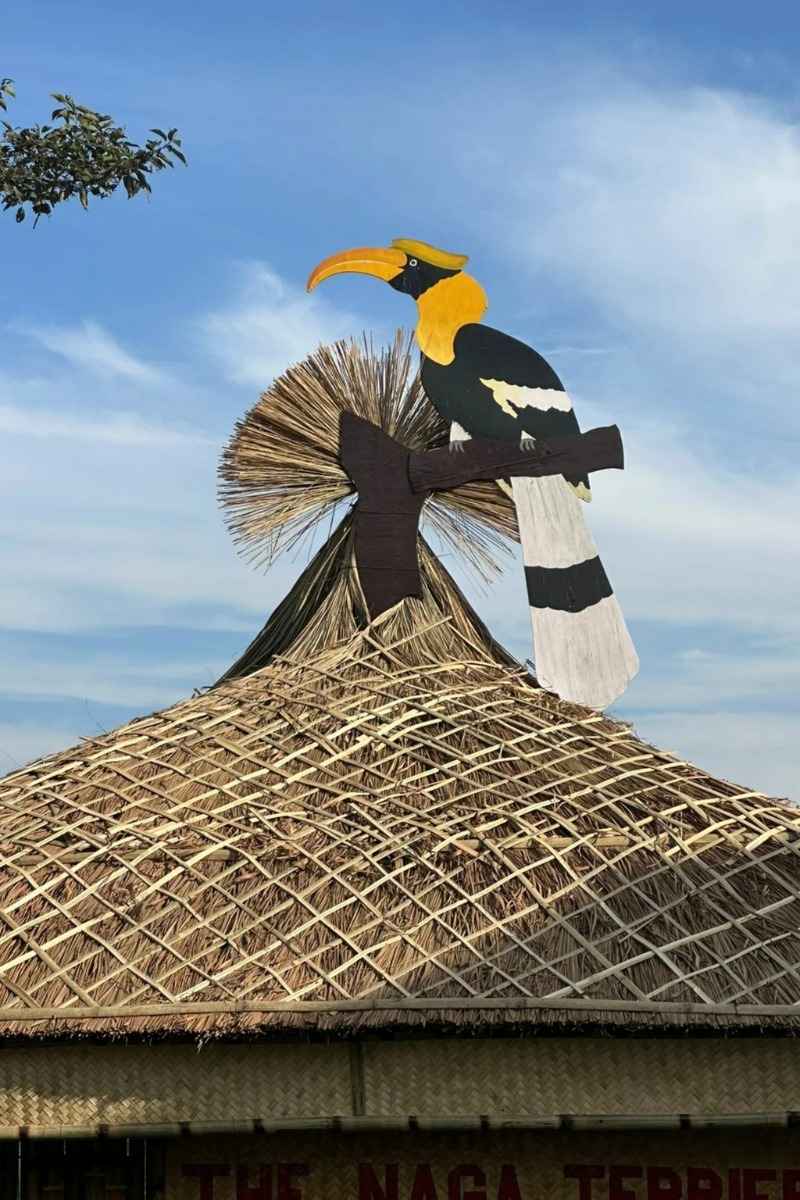
The story behind the name centers on the immense veneration for the great Indian hornbill bird across Nagaland’s indigenous groups. Since Nagaland is home to 17 distinct major tribes — each with its own distinct language and customs — the state government needed a unifying name when they created the festival in 2000. They chose the hornbill because it is the single most universally admired creature found in the folklore, myths, and songs of almost every single Naga tribe.
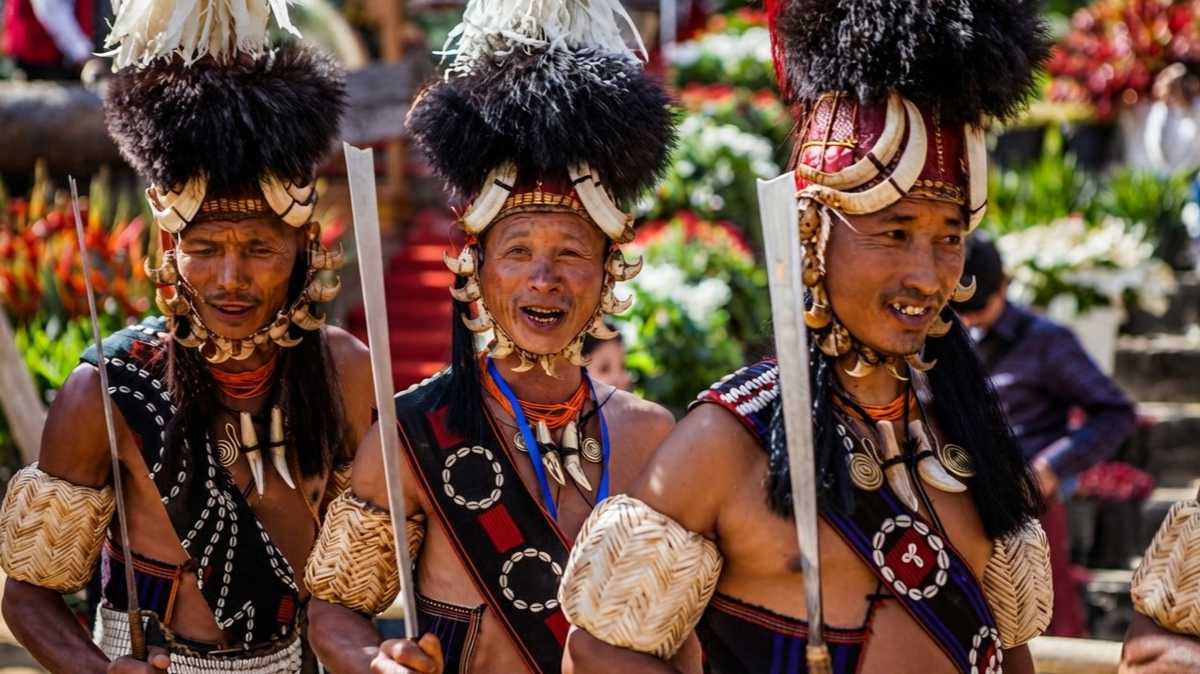
For the Naga people, this magnificent bird represents courage, loyalty, and strength. Its distinctive black-and-white tail feathers hold deep cultural significance and are regarded as sacred. In the past, wearing these prized feathers was a privilege reserved for the bravest warriors and the most respected village elders, symbolizing honor and achievement within the community. Ask an elder in any Morung today how he earned the right to wear those feathers, and watch his back straighten before he even answers; that single gesture says more about Naga values than any history book could. By choosing this revered bird as its namesake, the festival embraces a shared symbol of pride, unity, and heritage that resonates across all Naga tribes.
Kisama Heritage Village
Inside the Hornbill Festival’s Living Tribal Village
What is a Morung?
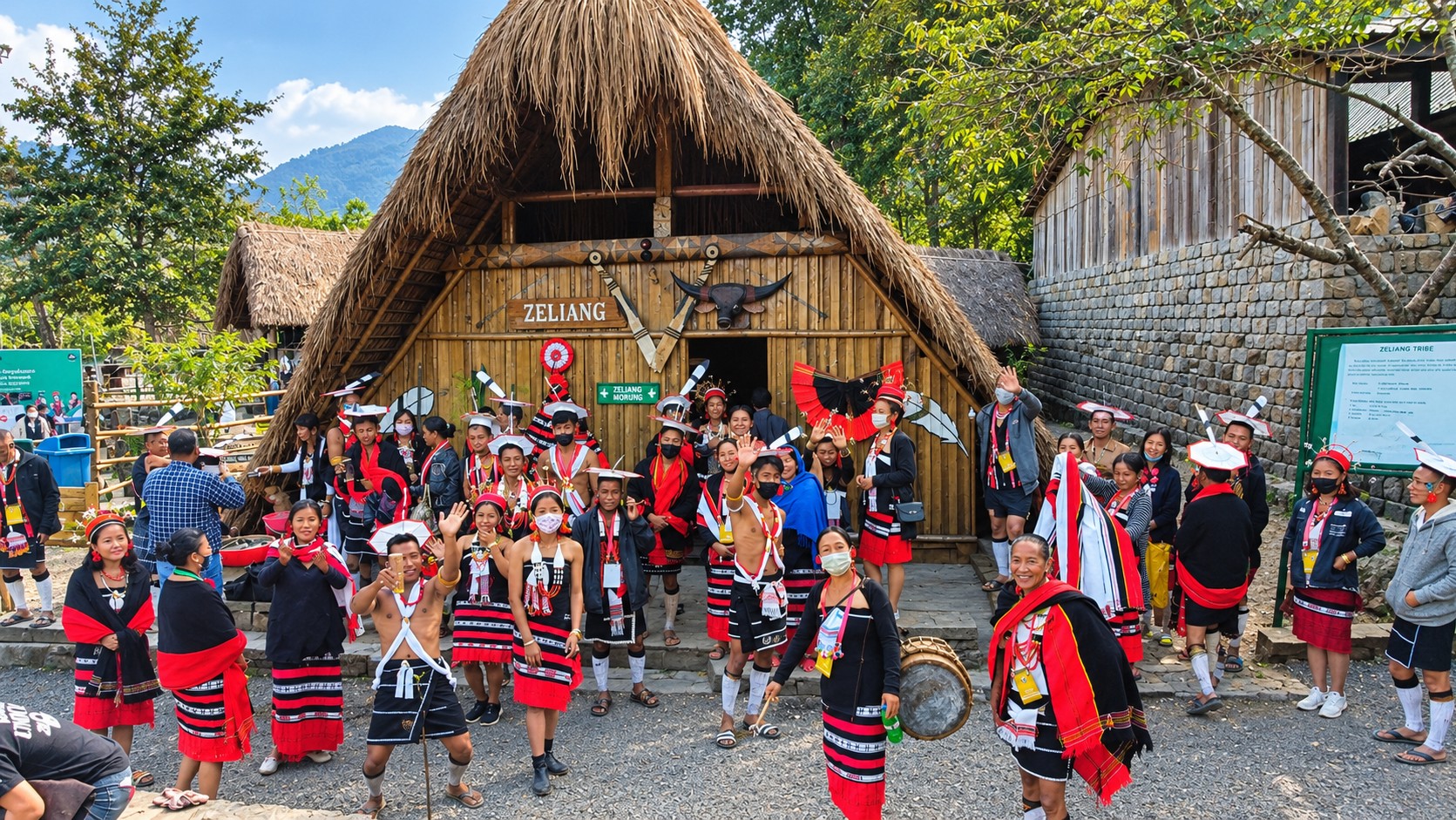
A Morung is a traditional Naga community house, historically used as a dormitory and training ground for unmarried young men. Long before formal schools existed in Nagaland, it was where boys learned tribal history, oral traditions, wood carving, and warfare skills directly from village elders. Today, each tribe builds a Morung at the Hornbill Festival as a cultural exhibit rather than a working dormitory.
The name Kisama is actually a modern acronym, created when the state government combined parts of the names of the local villages that donated their land for this cultural sanctuary — KI from Kigwema village, SA from Phesama village, and MA meaning "village" in the local dialect. It’s a small detail, but it says something bigger: this entire ground only exists because real villages gave up real land so every tribe could have a home here for ten days.
Located about 12 km from Kohima, walking into Kisama (officially also known as Naga Heritage Village) feels like stepping back in time, the whole site built to mirror a traditional tribal settlement. Each of Nagaland’s 17 tribes raises its own Morung here, and stepping inside one isn’t sightseeing, it’s sitting on the floor while someone’s grandfather explains what the pattern on his shawl means, then being handed food his daughter just smoked over the fire outside. For a few days a year, these huts are the last living classrooms for traditions that no school in Nagaland actually teaches.
Lesser Known Facts About the Hornbill Festival you probably didn’t know
Fact
Why It’s Interesting
Not Nagaland’s State Bird
The festival is named after the hornbill, but Nagaland’s official state bird is the Blyth’s Tragopan.
World-Famous Chilli Challenge
The Naga King Chilli (Bhut Jolokia) eating contest features one of the world’s hottest peppers.
Eco-Friendly Morungs
Traditional tribal houses are built by hand using bamboo, wood, and thatch.
Authentic Cultural Performances
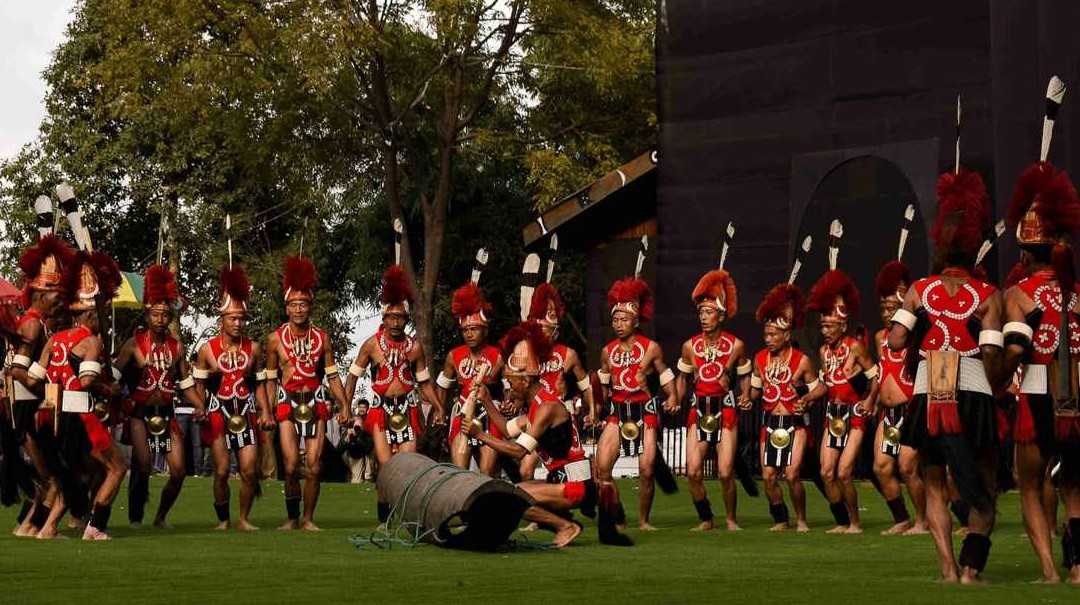
The war dances and ceremonies preserve centuries-old Naga traditions and cultural heritage.
17 Tribes, One Stage: The Heart of the Hornbill Festival
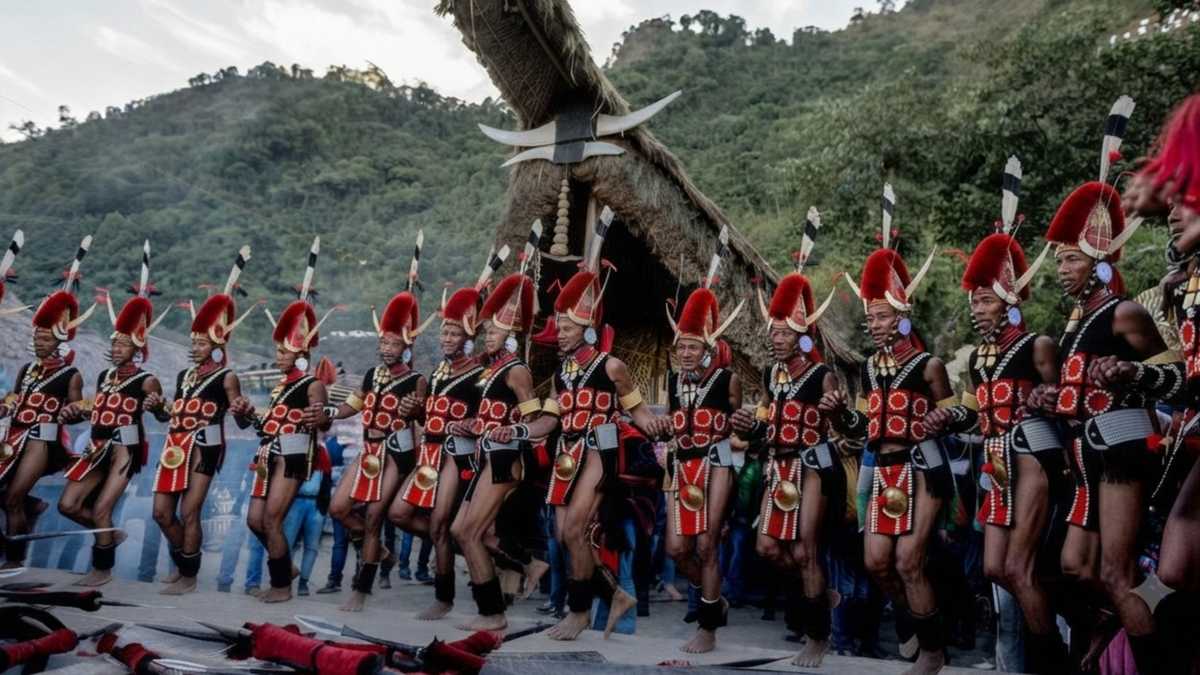
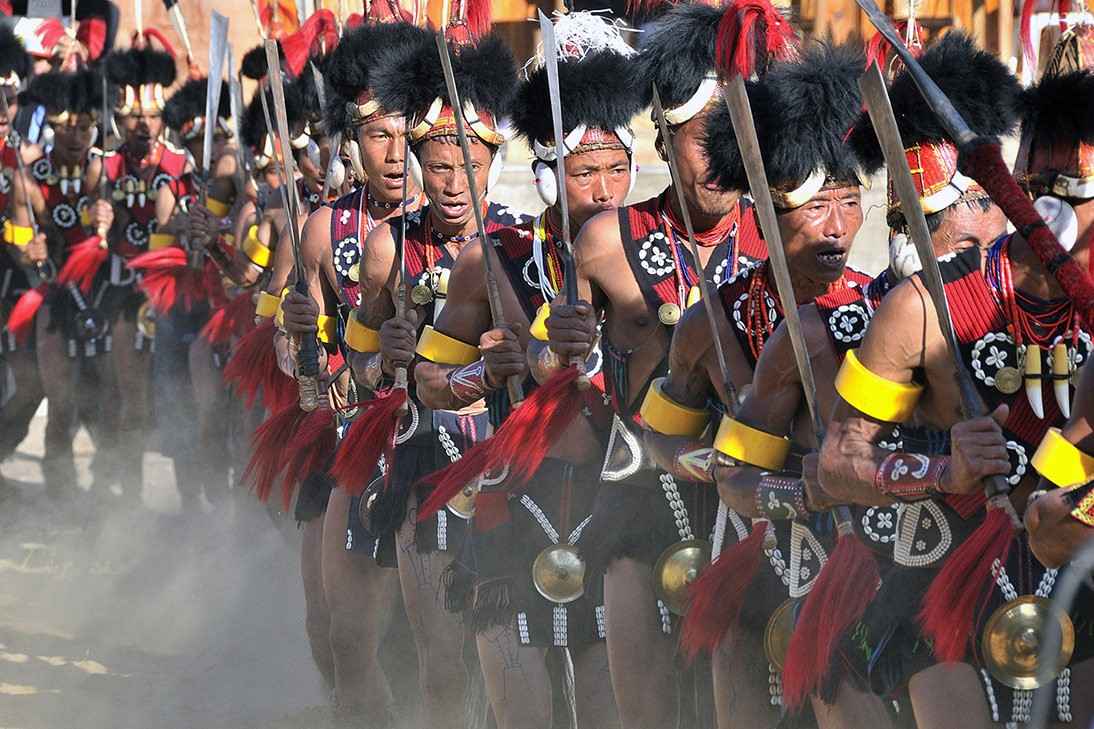
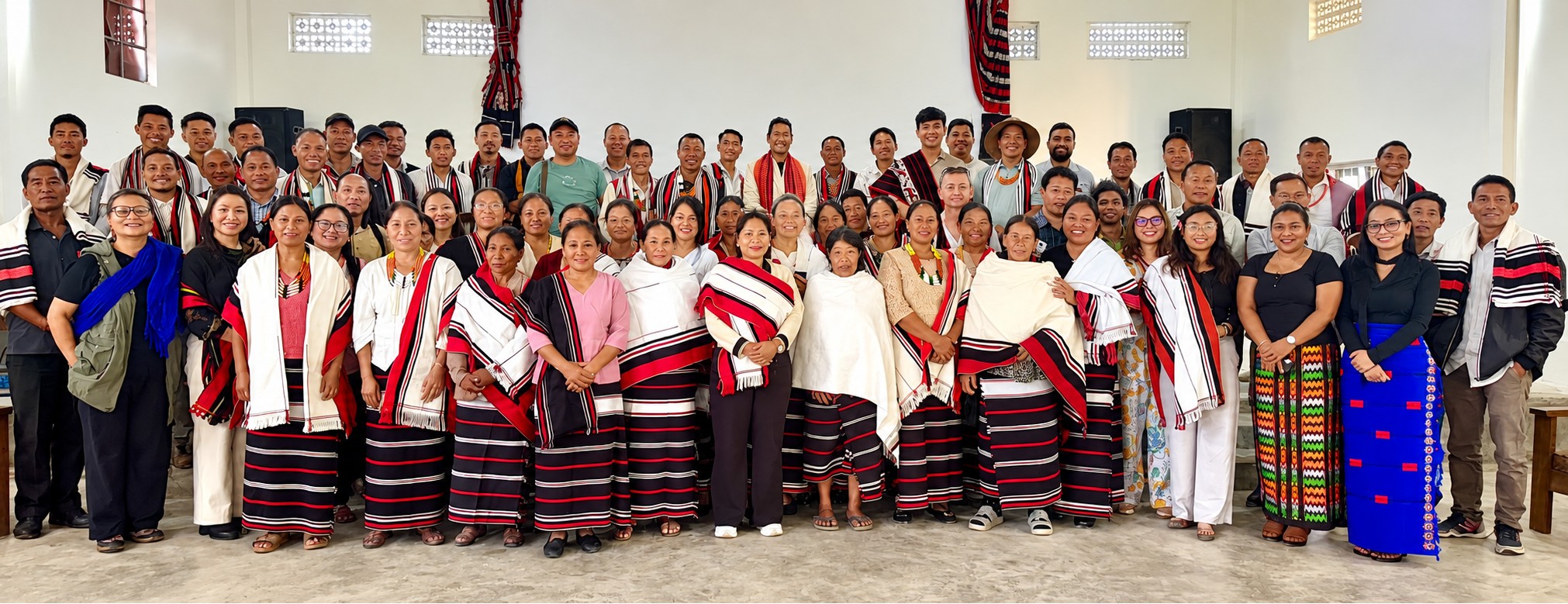
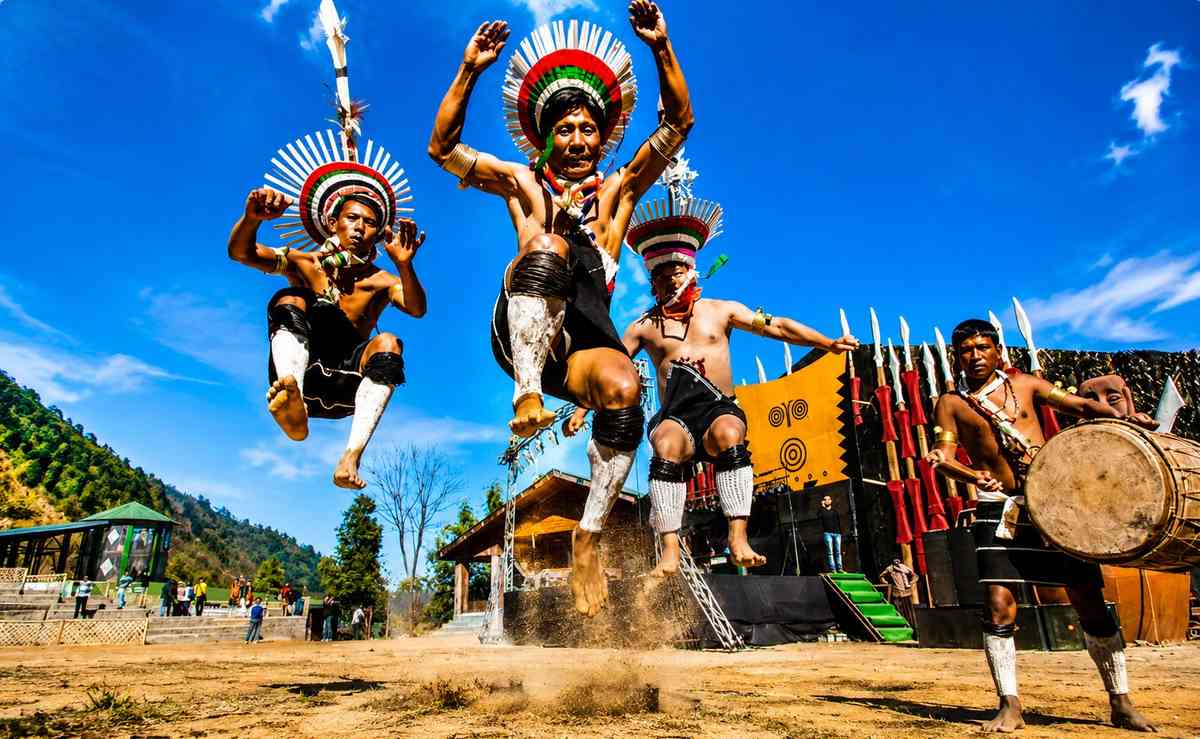
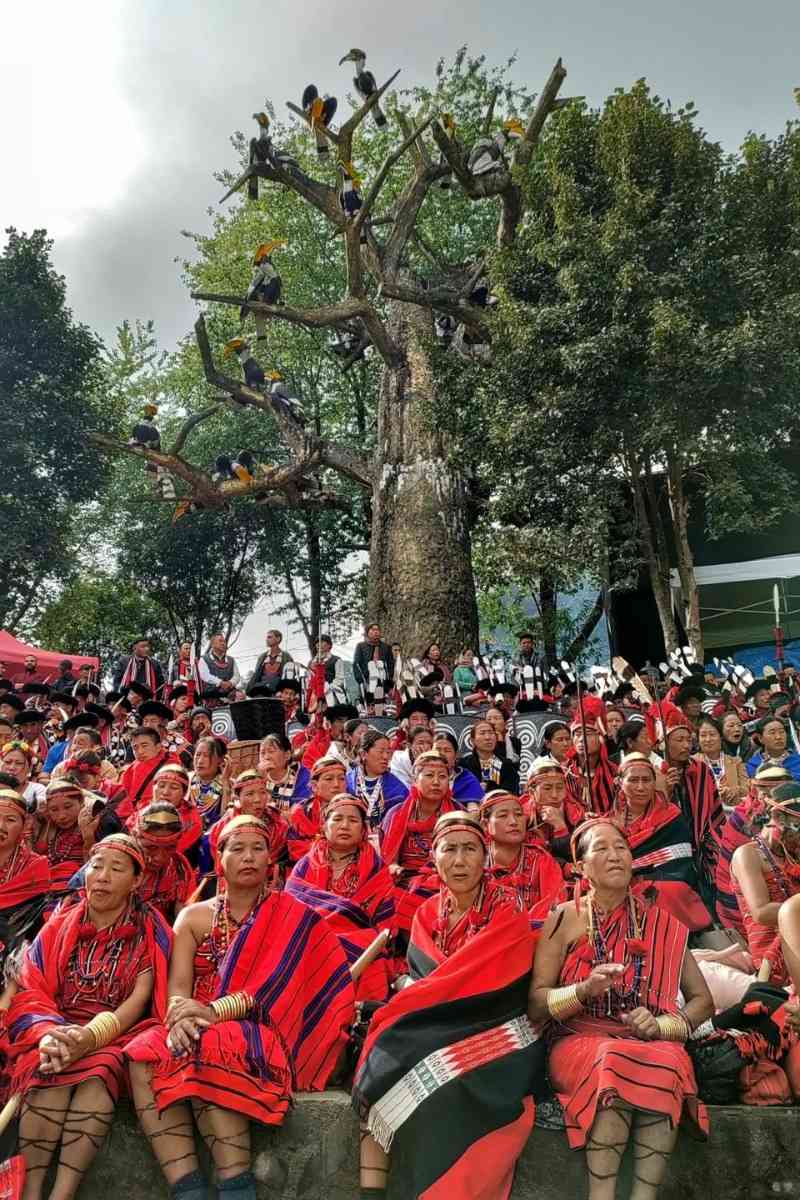
The true heart of the Hornbill Festival can be summed up in four words: 17 Tribes, One Stage. For generations, these tribes — among them the Angami, Ao, Konyak, Sumi, Chakhesang, and Lotha — lived apart in the hills, speaking different languages, following separate customs, often with little contact between one valley and the next. Today, this event undoes decades of distance in just ten days. Watching hundreds of warriors and dancers from every tribe perform side-by-side isn’t only a spectacle, it’s proof that 17 distinct identities can share one stage without losing what makes each of them their own. That’s the quiet, real impact of Hornbill: it’s not preserving the past behind glass, it’s keeping it alive, breathing, and dancing out loud every single year.
Walk from one Morung to the next, and the differences become impossible to miss. The Konyak, once renowned as headhunters, are known today for their distinct facial tattoos, intricate brass beadwork, and traditional gun-making skills passed down through generations. The Angami showcase master craftsmanship in cane and bamboo basketry, including the traditional khophi basket, alongside their sophisticated terraced wet-rice cultivation. The Ao, often credited as pioneers of education and Christianity in Nagaland, display colourful traditional shawls and elaborately carved log drums. The Sümi bring vibrant, athletic warrior dances and brightly coloured traditional spear-making, while the Chakhesang are known for intricate, colourful shawls and vibrant folk music, popularised globally by groups like the Tetseo Sisters.
Beyond the Dance: Rock Contests, Games & Markets
The Hornbill Festival isn’t only about tradition — it’s grown into a genuine cultural mashup. Evenings come alive with the Hornbill International Rock Contest (HIRC), one of India’s biggest and oldest rock band competitions, drawing performers from across the country and abroad. Through the day, visitors can watch (or even join) indigenous games like Naga wrestling, archery, and bamboo-pole climbing, or browse the handicrafts and handloom market for authentic Naga shawls, wood carvings, and bead jewellery made directly by tribal artisans.
When to Go: Opening Days vs. Mid-Festival vs. Closing Ceremony
If you want to see the grandest, most explosive cultural performances, book your trip for the first three days (Dec 1–3). You’ll witness the legendary Opening Ceremony where all 17 tribes take the stage at once. If you’d rather skip the heaviest crowds and want a more relaxed experience where you can actually sit inside the tribal huts, chat with the locals, and eat without long lines, the mid-festival window (Dec 4–7) is your sweet spot. The festival winds down with a Closing Ceremony on December 10th, a quieter, more reflective send-off compared to the opening day’s energy, and a good option if you prefer fewer crowds with a strong sense of occasion still intact.
What to Eat at the Hornbill Festival: Must-Try Naga Dishes & Drinks
The best place to eat is inside the tribal Morungs themselves, where each family cooks its own recipes over open wood fires and hands out plates to total strangers like it’s nothing unusual. That’s the real flavour of Hornbill, smoky food, shared without ceremony, eaten shoulder-to-shoulder with people you just met. Don’t miss:
- Smoked Pork with Bamboo Shoots
- Axone (fermented soybean)
- Zutho (traditional rice beer)
- Naga King Chilli Chutney (made with ghost peppers)
- Galho (a comforting rice-and-vegetable stew)
Where to Stay During the Hornbill Music Festival
Kohima town has the widest range of hotels and guesthouses, and most are within a short drive of Kisama. Rooms book out fast, often months ahead of December, so it’s worth locking in accommodation early. For a more immersive option, homestays in villages near Kisama let you experience Naga hospitality directly, often with home-cooked meals included.
Places to Explore Near Kohima
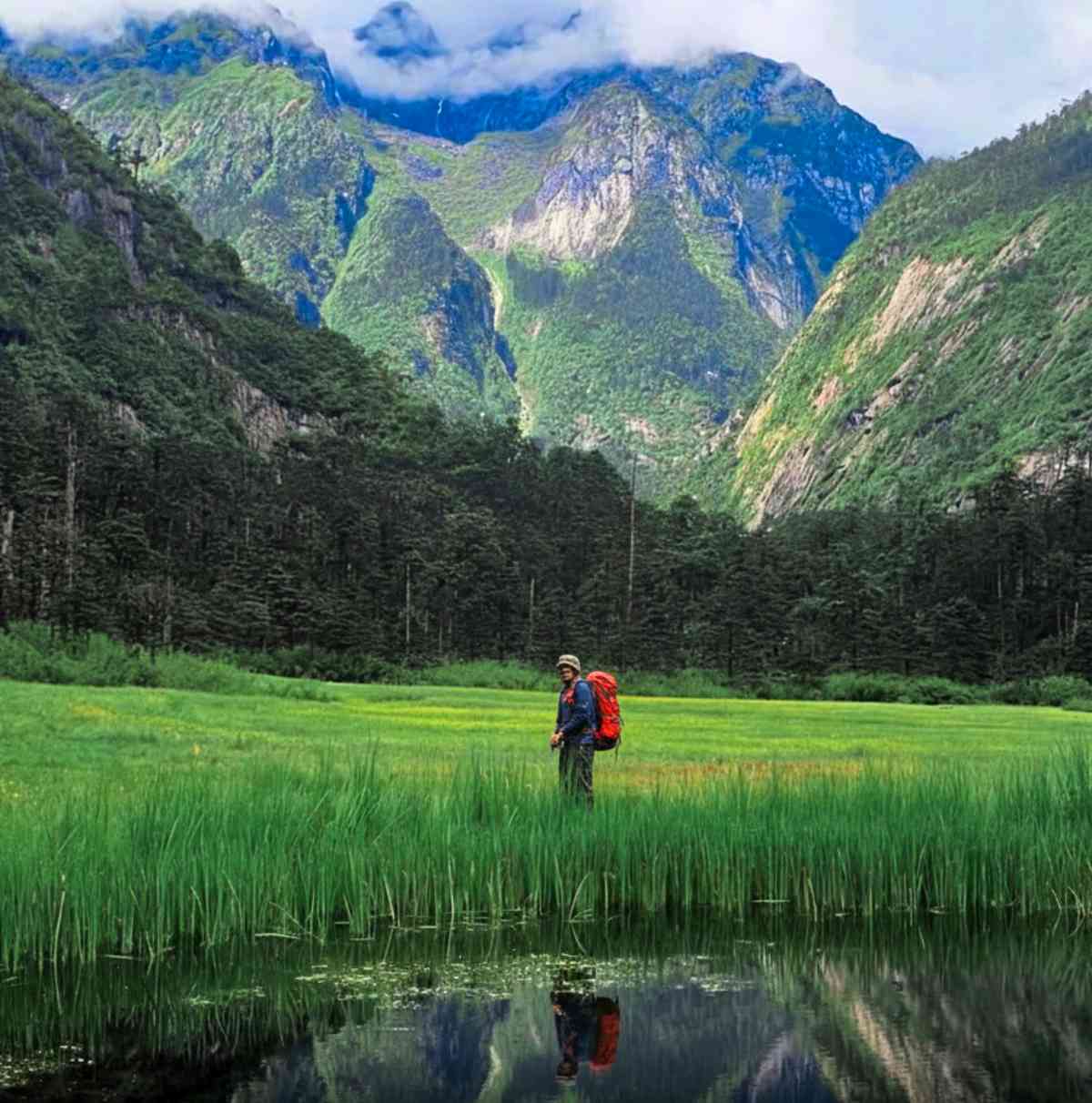
- Dzuko Valley: The paradise of North East India.
- Khonoma Village: Asia’s first green village.
- Dzuleke: The ultimate eco-retreat.
- Japfu Peak: Stand above the clouds.
- Pulie Badze Wildlife Sanctuary.
- Pfutsero.
- Kapamodzu.
What it’s really like to experience the Hornbill Festival ?
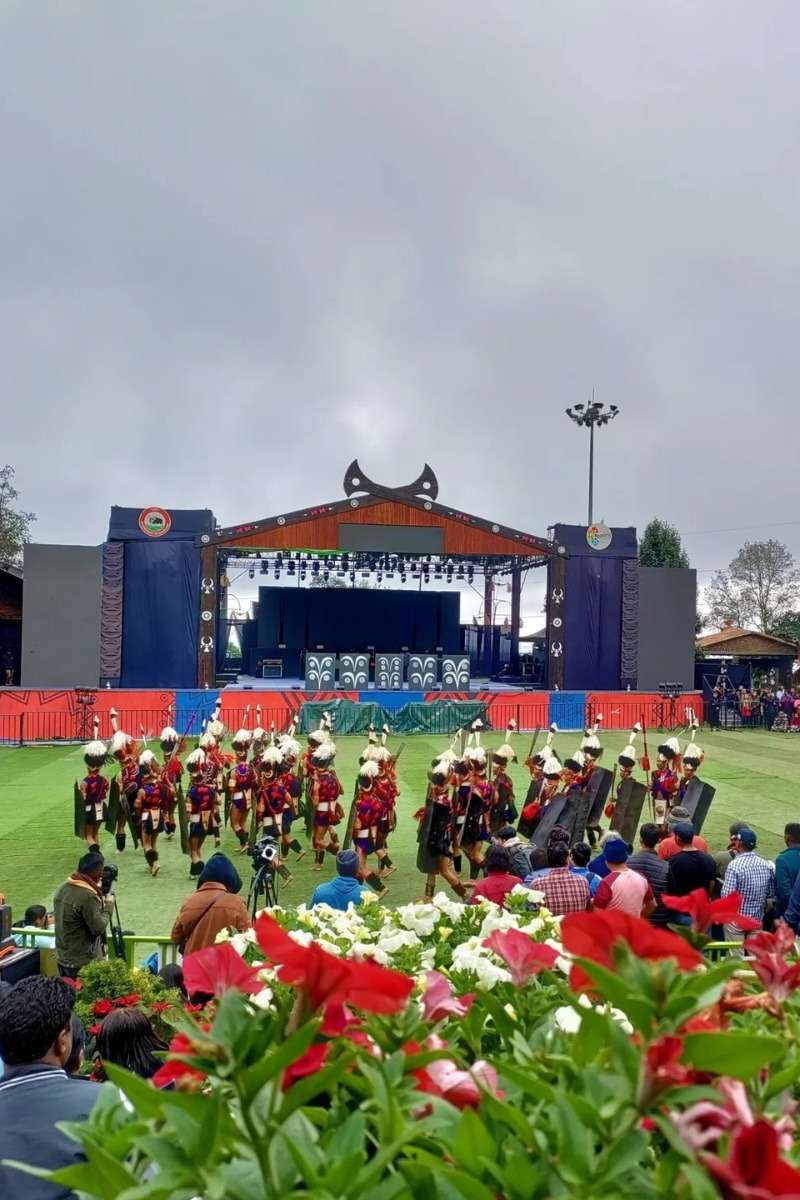
Visiting the Hornbill Festival was unlike anything I’d experienced before. The moment I stepped into the Naga Heritage Village at Kisama, I understood why it’s called Nagaland’s grand cultural carnival — the beat of log drums and the roar of warriors filled the air, and all seventeen proud Naga tribes had come together to show off their roots, rhythm, and village traditions. Warriors in feathered headgear performed dramatic war dances, women swirled past in vibrant tribal costumes, and the energy was infectious. I spent the afternoon trying my hand at the bamboo games, wincing my way through a chilli-eating contest I definitely wasn’t prepared for, and wandering through stalls to shop for handwoven crafts and jewelry. The food was an experience in itself — smoky pork with bamboo shoot, washed down with local rice beer that warmed me right up against the Kohima chill.
But honestly, the real magic happened after dark. As the sun went down, the festival transformed completely — the drums gave way to electric guitars, and the grounds came alive with the Hornbill International Rock Contest. Strangers turned into friends as we danced together under the lights, the traditional and the modern blending into one unforgettable night. Leaving Kisama, I didn’t just take back photos and souvenirs, I left with a real appreciation for how Nagaland keeps its tribal heritage so vibrantly alive.
Final Travel Tips Before You Visit the Hornbill Festival
Make your Hornbill Festival experience smooth and memorable with these essential travel tips.
🧥 Pack Warm Winter Clothing
December nights in Kisama can be very cold. Carry jackets, thermals, gloves, beanies, and warm socks for evening events.
💵 Carry Enough Cash
ATMs in Kohima and Kisama may run out of cash during the festival. Keep sufficient cash for food, shopping, and local transport.
👟 Wear Comfortable Walking Shoes
Kisama Heritage Village is spread across hilly terrain. Comfortable shoes will help you explore the festival with ease.
☂️ Keep a Rain Jacket or Umbrella
Mountain weather can change quickly, so it’s always wise to carry light rain protection.
📸 Respect Local Traditions
Always ask for permission before photographing tribal elders, performers, or entering traditional Morungs.
🧴 Carry Hand Sanitizer & Wet Wipes
These are useful while enjoying authentic Naga street food and during long festival days.
📍 Download Offline Maps
Mobile networks can become slow during peak hours. Save offline maps, hotel details, and digital tickets in advance.
🏨 Book Your Stay Early
Hotels and homestays near Kohima and Kisama sell out quickly. Reserve your accommodation well before December.
What Most Guides Won’t Tell You
Having watched the festival evolve across several years, one of the biggest shifts has been infrastructure — better roads, sturdier seating, and improved facilities at Kisama that simply didn’t exist in the festival’s earlier editions. But the daily rhythm of the festival itself hasn’t changed much. Each day, tribes make their way from their Morungs to the main ground for roughly four hours, taking turns showcasing traditional dances, alongside crowd favourites like the chili-eating contest and tug-of-war, before the day winds down with food and conversation back at the Morungs.
What makes Hornbill genuinely stand out, though, is what it represents: this is one of the only times all year that Nagaland’s culture is preserved and performed on a single platform, tribe by tribe. For ten days, it doesn’t feel like a tourist event, it feels like the soul of Nagaland coming alive.
Planning your own trip and want this kind of local knowledge built in from the start? Encamp Adventures runs curated Nagaland trips timed around the festival, so you skip the planning guesswork entirely. Click here for Booking: https://encampadventures.com/nagaland/itinerary/hornbill-festival-and-nagaland-group-tour-3nights4-days
Hornbill Festival FAQs
Planning to visit the Hornbill Festival in Nagaland ? Here are the most frequently asked questions answered to help you plan your trip with confidence.
1. When is the Hornbill Festival celebrated?
The Hornbill Festival is held every year from 1st December to 10th December at Kisama Heritage Village , near Kohima, Nagaland.
2. Which Naga tribes participate in the Hornbill Festival?
All 17 major Naga tribes , including the Angami, Ao, Konyak, Sumi, Chakhesang, Lotha, Sangtam, Zeliang, Phom, Rengma, Chang, Pochury, Khiamniungan, Kuki, Kachari, Yimkhiung, and Tikhir, showcase their unique traditions, dances, music, and cuisine.
3. Do I need a permit to visit Nagaland?
Indian visitors (except residents of exempt states) generally require an Inner Line Permit (ILP) . Foreign nationals currently do not need an ILP but should follow the latest travel and registration requirements issued by the Government of Nagaland.
4. What is the Hornbill Festival entry fee?
General entry tickets usually cost ₹50–₹100 per person per day . Additional charges may apply for professional photography or special events.
5. How do I reach Kisama Heritage Village?
The nearest airport and railway station are in Dimapur . From there, you can travel by taxi or bus to Kohima , followed by a short drive of about 12 km to Kisama Heritage Village.
6. Where should I stay during the festival?
Most visitors stay in Kohima , where you’ll find hotels, guesthouses, and homestays. Booking your accommodation several months in advance is highly recommended.
7. Is the Hornbill Festival safe for solo travelers?
Yes. The Hornbill Festival is considered safe for solo and women travelers, with dedicated tourist assistance and security during the event.
8. Is vegetarian food available at the festival?
Yes. Along with traditional Naga cuisine, visitors can enjoy vegetarian dishes, fresh vegetables, bamboo shoot specialties, local rice-based meals, and popular Indian and Chinese food.
9. Does the festival ticket include the Hornbill Rock Concert?
No. The Hornbill International Rock Contest (HIRC) and other evening concerts generally require a separate ticket , while the main festival entry covers access to the cultural arena.
10. What is the best time to visit the Hornbill Festival?
The best time to visit is during the first week of December , when cultural performances, tribal exhibitions, music events, local food festivals, and handicraft markets are in full swing.
About Encamp Adventures
- 20,000+ travellers served
- Community tourism expertise
- Climate - first travel initiatives
- Northeast India specialization
About Carbon Trace
Beyond curating trips to festivals like Hornbill, Encamp Adventures also powers Carbontrace.in, a sustainability and carbon intelligence platform that helps businesses, communities, and individuals measure, offset, and monetize their carbon footprint using satellite-based geospatial analytics, verified carbon credits, and blockchain-backed reporting. It’s part of a bigger mission: making sure the same communities that keep cultural treasures like the Hornbill Festival alive also benefit from transparent, verifiable climate action.